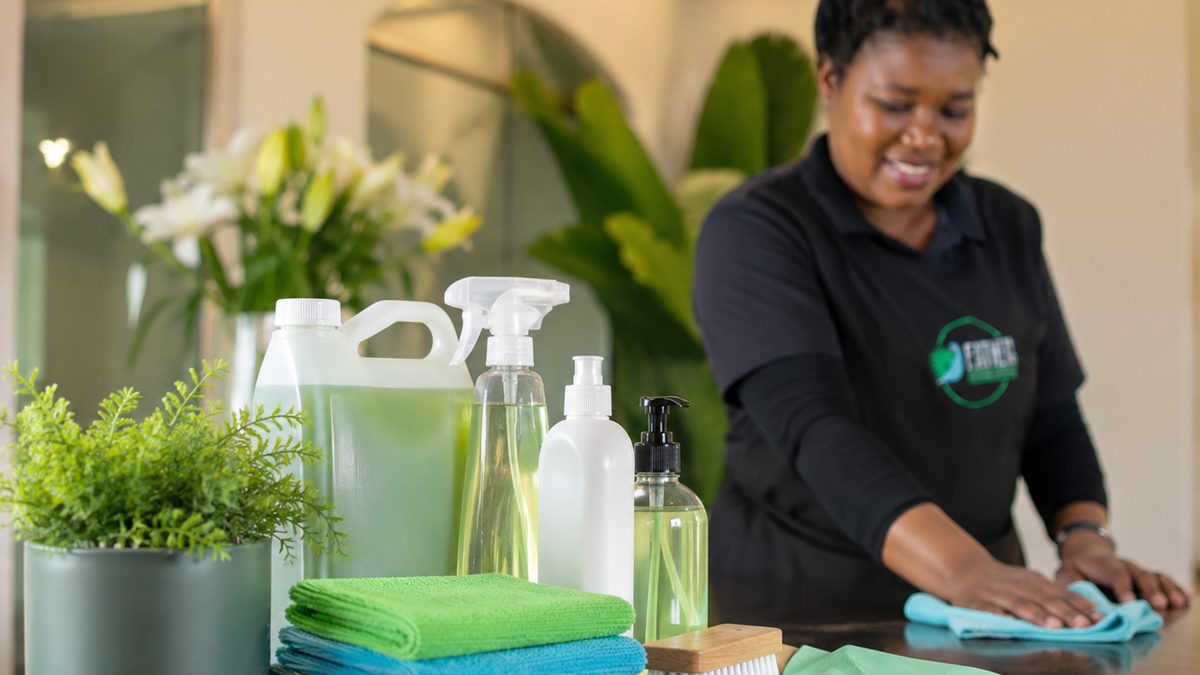
What a deep clean genuinely includes, how often you need one, and what drives the price.
"Deep clean" is one of the least precise terms in the cleaning industry. It is used to describe everything from a slightly more thorough weekly service to a full periodic programme involving floor stripping, carpet extraction and high-level access work. Because the term is vague, quotes for it are difficult to compare and expectations are frequently mismatched.
This guide sets out what a deep clean genuinely involves, how it differs from routine cleaning, how often an office needs one, what drives the price, and how to brief a contractor so you get what you are paying for.
Routine Cleaning vs Deep Cleaning: The Actual Difference
Routine cleaning maintains a standard. Deep cleaning resets it.
Routine office cleaning addresses what accumulates daily and weekly on accessible surfaces — floors, desks, bathrooms, kitchens, waste. It is designed to be performed quickly, repeatedly, around occupancy, without specialist access equipment.
Deep cleaning addresses what routine cleaning structurally cannot reach: soiling embedded in materials, accumulation in high-level and concealed areas, and surfaces that need machinery or extended dwell time rather than a wipe.
| Routine Cleaning | Deep Cleaning | |
|---|---|---|
| Purpose | Maintain current condition | Reset condition; remove embedded soiling |
| Frequency | Daily to weekly | Quarterly to annually |
| Access | Reachable surfaces | High level, behind and beneath fixtures, concealed |
| Equipment | Vacuum, mop, cloths, general chemicals | Floor machines, extractors, access equipment, specialist chemicals |
| Timing | Around occupancy | After hours, weekends, shutdown periods |
| Duration | 1–3 hours typically | One to several days depending on size |
What a Proper Office Deep Clean Includes
A genuine deep clean should cover the following. If a quote omits several of these categories without explanation, it is a thorough routine clean rather than a deep clean, and it should be priced as such.
High-level cleaning
- Light fittings and diffusers — internal and external, which measurably restores light output
- Ceiling tiles, grid and any visible ductwork
- HVAC grilles, vents and intake covers
- Tops of cupboards, partitions, racking and shelving units
- Window heads, curtain tracks and blind headrails
- Sprinkler heads, smoke detectors and exposed conduit
Flooring
- Carpet extraction — hot water extraction or appropriate method for the fibre and construction
- Spot treatment of individual staining prior to full extraction
- Hard floor stripping and resealing where the existing seal has worn
- Machine scrubbing and polishing appropriate to substrate
- Edge and corner detail, which routine machine cleaning never reaches
- Under and behind fixed furniture and storage
- Skirting boards and floor-wall junctions
Workstations and furniture
- Full desk clearance where agreed, and cleaning of the surface beneath
- Desk sides, undersides, cable trays and modesty panels
- Chair upholstery cleaning, including bases, castors and gas lift columns
- Pedestal and cabinet interiors where agreed
- Partition screens and acoustic panels
- Keyboard, monitor and telephone detail cleaning
Glazing and partitions
- Internal and external glazing including frames, beading and tracks
- Glass partitions and manifestation
- Mirrors and glazed doors including edges and door furniture
- Window tracks and drainage channels
Bathrooms
- Descaling of sanitaryware, taps and shower fittings
- Grout deep cleaning and, where required, regrouting assessment
- Cubicle partitions including tops, undersides and fixings
- Extraction fan grilles and ducting where accessible
- Behind and beneath sanitaryware and pipework
- Drain treatment and trap cleaning
Kitchen and break areas
- Appliance deep clean — inside and behind fridge, microwave, oven, dishwasher
- Cupboard interiors, including removal of expired stock where agreed
- Extraction hood and filter degreasing where fitted
- Behind and beneath units and appliances
- Sink, waste and drain treatment
- Splashbacks, tiling and grout
How Often Does an Office Need Deep Cleaning?
There is no universal answer, and any contractor who gives you one without seeing the premises is quoting a template. Frequency depends on occupancy density, floor coverings, local conditions and the quality of the routine schedule underneath.
As a working starting point:
| Environment | Typical Interval |
|---|---|
| High-density office, heavy foot traffic, carpeted | Every 4–6 months |
| Standard commercial office | Every 6–12 months |
| Low-density or hybrid-occupancy office | Annually |
| Client-facing reception and meeting areas | More frequently than the rest of the floor |
| Kitchen and bathrooms | Quarterly, regardless of the wider schedule |
Local factors that shorten the interval in Gqeberha
- Industrial dust deposition — accelerates accumulation on high-level surfaces, in HVAC grilles and in carpet pile. See our guide to manganese dust in Port Elizabeth.
- Coastal humidity — supports mould establishment in bathrooms, kitchens and around HVAC drip trays
- Salt air — affects glazing, metal fixtures and external door furniture
An office in Gqeberha working to a schedule designed for an inland location will consistently fall behind. This is one of the more common reasons businesses conclude their deep clean "did not last."
Triggers That Mean You Need One Sooner
Independent of schedule, bring a deep clean forward when:
- Carpet looks flat or discoloured in traffic lanes despite regular vacuuming
- Hard floors have lost their finish or show wear reaching the substrate
- There is a persistent odour you cannot locate
- Visible dust has established on high-level surfaces, light fittings or vents
- Bathroom grout is discoloured or mould is visible
- You are preparing for a lease inspection, audit, client visit or open day
- You are moving in, moving out, or have just completed building work
- There has been a water ingress, leak or flood event
- You have taken over premises from a previous occupant
- Following an illness outbreak in the workplace
What Drives the Price
Deep clean quotes vary widely, and usually for legitimate reasons. The main drivers:
- Floor area and layout — open plan is faster per square metre than cellular offices
- Current condition — premises that have been well maintained cost less to reset than premises that have not
- Floor coverings — carpet extraction, hard floor stripping and resealing are labour and equipment intensive
- Ceiling height and access — anything requiring towers, platforms or working-at-height procedure adds cost and time
- Furniture density — moving and replacing furniture is a significant labour component
- Timing — after-hours, weekend and public holiday work carries premium rates
- Occupied versus vacant — vacant premises are considerably faster
- Specialist inclusions — upholstery, blinds, extraction hoods, external glazing at height
Why we do not publish a price per square metre
Any figure we quoted here would be wrong for most readers. A vacant open-plan office with vinyl flooring and a heavily furnished cellular office with worn carpet differ by a multiple, not a margin. Deep cleaning is quoted after a walkthrough, and any contractor pricing it without one is either padding for risk or planning to reduce scope on the day.
How to Brief a Contractor Properly
Most deep clean disputes come from an unclear brief rather than poor work. Cover these points before anyone quotes:
- Define the areas. Which floors, which rooms. Explicitly state anything excluded — server rooms, secure stores, private offices.
- Define desk clearance responsibility. Will staff clear their own desks, or is the contractor moving items? This single point causes more disputes than any other.
- Specify furniture movement. Is furniture to be moved and replaced, or cleaned around?
- Agree access and timing. Keys, alarm codes, after-hours access, security escort requirements, parking.
- Confirm power and water. Floor machines and extractors need both. Confirm availability and any restrictions.
- Address IT equipment explicitly. State what may and may not be moved, unplugged or wiped, and by whom.
- Agree drying time. Extracted carpet needs hours to dry. Plan around occupancy.
- Request the method statement. A competent contractor can tell you what product and method they will use on each substrate.
- Ask about working at height. Confirm equipment, competence and insurance.
- Agree the sign-off process. Who inspects, against what list, and what happens if something is missed.
Preparing Your Office
What you do beforehand materially affects the result:
- Communicate the date and expectations to staff well in advance
- Ask staff to clear desk surfaces and remove personal valuables
- Empty the fridge and communicate a disposal policy for unlabelled items
- Back up and, where necessary, shut down IT equipment
- Remove or secure confidential documents
- Identify and flag any surfaces with known sensitivity — antique furniture, specialist finishes, artwork
- Confirm parking and loading access for equipment
- Plan for drying time before reoccupation
How to Judge the Result
Inspect against the scope, not against a general impression. Specifically check:
- Run a finger along the top of a door frame, partition or light fitting
- Look at carpet in traffic lanes, not in the middle of the room
- Check floor edges, corners and behind doors — machines do not reach these
- Inspect bathroom grout and beneath sanitaryware
- Open the fridge and microwave
- Look at the underside and edges of desks
- Check window tracks and frames, not just the glass
- Confirm furniture has been replaced in its correct position
Deep Cleaning Does Not Replace a Good Routine Schedule
One honest caveat. A deep clean resets condition; it does not maintain it. Businesses that reduce routine cleaning on the assumption that an annual deep clean will compensate consistently end up worse off — the deep clean costs more each time because there is more to reset, and the premises spend most of the year in poor condition.
The efficient pattern is a competent routine schedule that holds the standard, with periodic deep cleaning to address what routine work structurally cannot reach. Deep cleaning is the complement to a good schedule, not a substitute for one.
The Bottom Line
A genuine office deep clean covers high-level areas, flooring treatment, furniture detail, glazing, bathrooms and kitchens to a standard routine cleaning cannot reach. Frequency depends on occupancy, floor coverings and local conditions — and in Gqeberha, industrial dust deposition and coastal humidity shorten the interval compared with inland premises.
The two things that most determine whether you get value: a clear written scope agreed before the work, and a routine schedule underneath it that holds the standard afterwards.
Feathers Cleaning and Hygiene delivers scheduled and periodic deep cleaning for commercial premises across Gqeberha, East London, Mthatha and the wider Eastern Cape.
Want this handled properly?
Tell us what you need cleaned and we will come and look at it before quoting anything.
Request a Written Scope Or call 079 096 3267