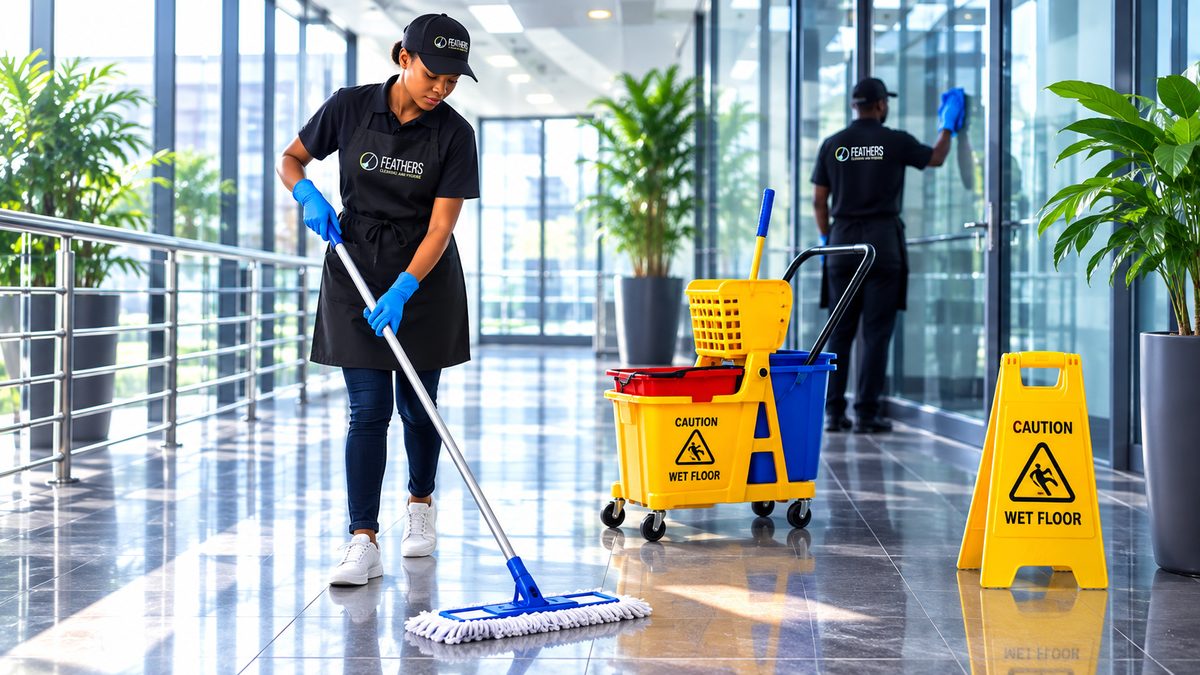
Identify what you have, and clean it without damaging it.
Hard flooring is usually the most expensive replaceable surface in a home, and it is the one most commonly damaged by well-intentioned cleaning. Over-wetting a laminate floor causes swelling that cannot be reversed. The wrong product on a sealed timber floor strips the finish. Abrasive cleaning on vinyl dulls it permanently.
The good news is that all three types need very little to stay in good condition — provided you know which one you have and what it cannot tolerate.
First: Identify What You Actually Have
Vinyl, laminate and engineered timber can look remarkably similar, and they need different treatment. If you are unsure:
- Check an edge or a cut section — at a doorway, under a threshold strip, or in a cupboard. Laminate shows a dense fibreboard core. Engineered timber shows plywood layers with a thin timber wear layer. Solid timber is the same material all the way through. Vinyl is uniform and flexible.
- Press it. Vinyl has slight give and feels warmer underfoot. Laminate and timber feel rigid.
- Look at the pattern repeat. Laminate and vinyl are printed, so the grain pattern repeats every few boards. Real timber does not repeat.
- Tap it. Laminate sounds hollow; timber sounds denser.
If you genuinely cannot tell, treat it as laminate. Laminate is the least water-tolerant of the three, so that assumption is the safe one.
The Rules That Apply to All Three
- Remove dry soil before wet cleaning. Grit is abrasive. Mopping over it grinds it into the surface and creates fine scratching. Sweep or vacuum first, every time.
- Damp, never wet. A mop should be wrung until it is barely damp. Standing water is the enemy of all three surfaces, laminate most of all.
- Never use abrasives. No scouring pads, no abrasive powders, no steel wool. All three have a surface finish that abrasion removes permanently.
- Deal with spills immediately. Especially anything acidic — wine, juice, vinegar — and especially on timber.
- Use felt pads under furniture and check them periodically. Pads that have collected grit become sandpaper.
- Matting at every entrance. This does more to preserve flooring than any cleaning product, by capturing grit before it reaches the floor.
Steam mops: the honest position
Many steam mop manufacturers market them as suitable for sealed hard floors. Many flooring manufacturers state that steam cleaning voids the warranty. These positions genuinely conflict, and we are not going to pretend there is a settled answer. What is not in dispute: steam drives heat and moisture into seams and joints, and on laminate and engineered boards that is exactly where swelling starts. Check your flooring manufacturer's guidance before using one — their position governs your warranty, not the mop manufacturer's.
Vinyl Flooring
The most forgiving of the three, and the most tolerant of moisture — though sheet vinyl and luxury vinyl tile differ at the seams.
Routine
- Sweep or vacuum regularly — use a hard-floor setting, with the beater bar off
- Damp mop with a neutral pH floor cleaner
- Rinse if the product leaves any residue — build-up dulls vinyl over time
Avoid
- Abrasive pads and powders, which dull the wear layer permanently
- Solvent-based cleaners, which can soften vinyl
- Highly alkaline products used repeatedly
- Rubber-backed mats, which can cause permanent discolouration on some vinyls
- Dragging furniture — vinyl gouges easily
Common problems
Scuff marks usually come off with a soft cloth and a little neutral cleaner, or a clean tennis ball rubbed over the mark. Dullness is normally product residue rather than wear — try rinsing with clean water before assuming the floor is worn.
Laminate Flooring
The least water-tolerant surface in most homes, and the one where cleaning most often causes irreversible damage.
The reason: laminate is a printed decorative layer over a fibreboard core. If water reaches the core through a seam or an edge, the board swells. Swelling is permanent — no drying process reverses it, and the board has to be replaced.
Routine
- Sweep, dust mop or vacuum on a hard-floor setting
- Damp mop with a microfibre mop wrung out thoroughly — the floor should be dry within a minute of passing
- Use a laminate-specific cleaner or plain water
- Dry any area that stays visibly wet
Never
- Wet mop or flood the floor. The most common cause of laminate failure.
- Use oil soaps, wax or polish — laminate cannot absorb them, so they sit on the surface and create a film that attracts dirt
- Use abrasives
- Steam clean without checking the manufacturer's position first
- Leave spills, especially at seams and edges
Common problems
Cloudiness or streaking is almost always product residue from using too much cleaner. Mop with plain water repeatedly until it clears. Swelling at edges or seams is water damage and is not repairable — the affected boards need replacing, and the water source needs identifying first.
Timber Flooring
Timber is the most valuable and the most variable, because treatment depends entirely on the finish rather than the wood.
Identify the finish first
Put a drop of water in an inconspicuous area:
- It beads and sits on the surface — the floor is sealed, typically with polyurethane or lacquer
- It darkens the wood or soaks in — the floor is oiled, waxed, or the finish has worn through
This distinction matters, because the two need opposite approaches.
Sealed timber (polyurethane or lacquer)
You are cleaning the finish, not the wood.
- Sweep or vacuum regularly — grit causes most visible wear
- Damp mop with a cleaner formulated for sealed timber
- Never flood; the floor should dry within a minute
- Avoid vinegar and other acidic products — they dull polyurethane over time
- Avoid oil soaps, which leave a film that interferes with future recoating
Maintenance: sealed floors can usually be screened and recoated before wear reaches the timber, which is far cheaper than full sanding. The signal is dulling in traffic lanes. Once wear reaches the wood, only sanding and refinishing will resolve it.
Oiled or waxed timber
Here the finish is in the wood rather than on it.
- Sweep or vacuum regularly
- Clean with a product made for oiled floors — pH-neutral or slightly acidic, never alkaline
- Use minimal water
- Re-oil periodically, either in traffic areas or across the whole floor
- Never use polyurethane-floor products on an oiled floor
Advantage: oiled floors can be spot-repaired. A damaged area can be cleaned, sanded lightly and re-oiled without redoing the whole floor.
Unsealed or bare timber
Rare in modern homes, common in older properties. Keep water away from it almost entirely — sweep and dry-clean only, with spot cleaning where necessary. If you have unsealed timber, sealing or oiling it is worth doing.
Preventing Damage
- Matting at every external door, and a second mat inside — this is the highest-return intervention available
- Shoes off indoors, which matters particularly in Gqeberha where tracked-in dust is heavier and more abrasive than in many areas
- Felt pads under all furniture legs, checked and replaced periodically
- Lift, never drag furniture and appliances
- Trim pet claws — claw scratching on timber and laminate is common and avoidable
- Mind direct sunlight — timber and some vinyls fade unevenly. Rugs and blinds help.
- Rugs in traffic lanes, particularly hallways and in front of sinks
- Watch humidity — timber moves with moisture, and coastal humidity in Nelson Mandela Bay means seasonal movement is normal. Sudden gaps or cupping suggests a moisture problem worth investigating.
What Cleaning Cannot Fix
Being honest about the limits:
- Swollen laminate — board replacement only
- Worn-through sealer on timber — sanding and refinishing
- Deep gouges in any surface
- Cupping or crowning on timber, which indicates a moisture problem beneath the floor
- Failed adhesive causing lifting or hollow-sounding areas
- Fading and colour variation from sun exposure
If you are cleaning something repeatedly with no improvement, it is likely damage rather than dirt, and continuing to clean it may make it worse.
The Bottom Line
All three floor types need the same two things: dry soil removed before wet cleaning, and damp rather than wet mopping. Beyond that, match the product to the surface — neutral cleaner on vinyl, laminate-specific or plain water on laminate, and a product matched to the finish on timber.
The single most effective thing you can do is stop grit reaching the floor in the first place. Matting at every entrance and shoes off indoors will preserve a floor longer than any cleaning routine.
Feathers Cleaning and Hygiene provides residential cleaning and hard floor treatment across Gqeberha, East London, Mthatha and the wider Eastern Cape.
Want this handled properly?
Tell us what you need cleaned and we will come and look at it before quoting anything.
Request a Written Scope Or call 079 096 3267