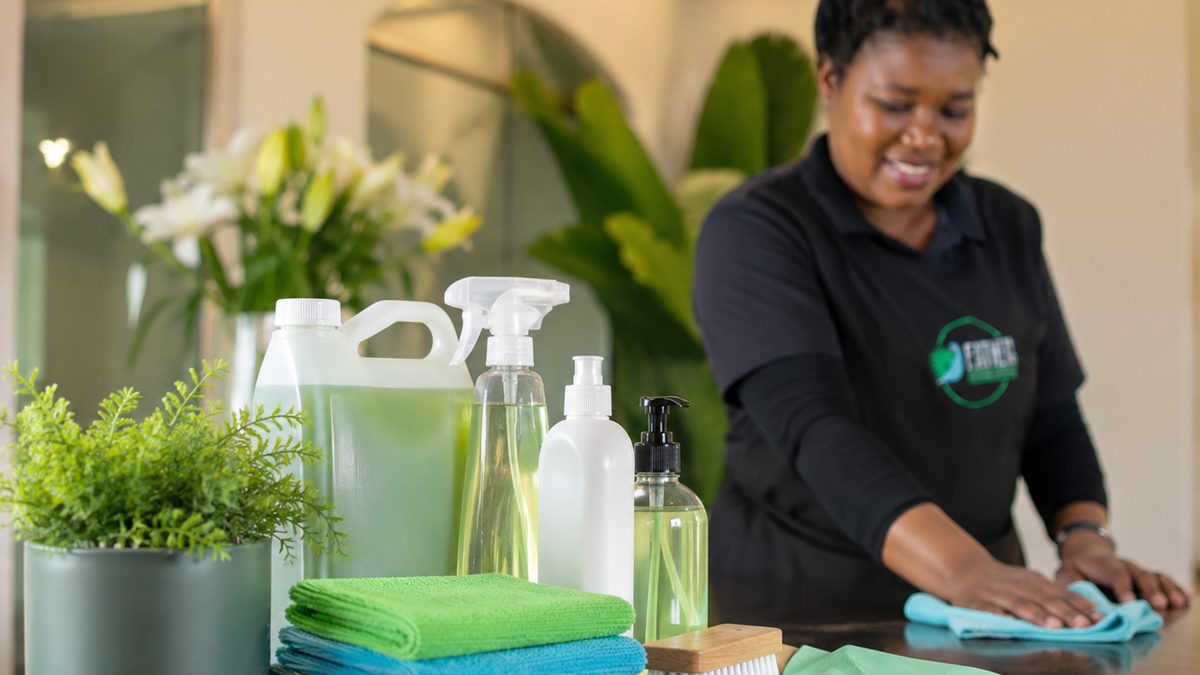
Short routines that actually hold: the right order of work.
Most house cleaning advice fails for the same reason: it describes an ideal routine that assumes you have more time and more discipline than anyone actually has. The routines that hold are short, specific, attached to something you already do, and organised so that you never clean the same surface twice.
Here is what works, starting with the principles that make everything else faster.
Four Principles That Save the Most Time
1. Work top to bottom, always
Dust falls. If you vacuum before you dust the shelves, you will be vacuuming again. In every room, work from high surfaces down to the floor, and clean the floor last.
2. Apply chemical first, come back to it
This is the single biggest efficiency in cleaning, and almost nobody does it at home. Spray the toilet, the shower and the oven, then walk away and do something else. Cleaning products need contact time to work. Spraying and immediately scrubbing means you are doing with effort what the product would have done on its own.
3. Dry soil first, wet cleaning second
Sweep or vacuum before you mop. Mopping over loose grit turns it into a slurry that you then spread across the floor. The same applies to any surface — remove crumbs and dust before you introduce water.
4. Prevention beats removal, every time
Wiping the shower down after use takes fifteen seconds. Removing established soap scum takes forty minutes and a scouring pad. Nearly every hard cleaning job in a house is an easy job that was deferred.
The Daily Routine: Fifteen Minutes, Split in Two
Fifteen minutes a day genuinely keeps a house from drifting. The trick is splitting it and attaching each half to something you already do.
Morning — five minutes
- Make the bed. It takes ninety seconds and changes how the whole room reads.
- Wipe the bathroom basin and taps after you have finished in there.
- Squeegee or wipe the shower down after use.
- Rinse breakfast dishes or load them into the dishwasher.
- Wipe the kitchen counter.
Evening — ten minutes
- Reset the kitchen fully. Dishes done, counters cleared and wiped, hob wiped, sink rinsed. Waking up to a clean kitchen sets the tone for the next day more than any other single habit.
- Ten-minute tidy. Walk through the living areas and return things to where they belong. Set a timer — it stops the task expanding.
- Take out anything with food in it. Kitchen waste out, not left overnight.
- Quick sweep of the highest-traffic floor area if it needs it.
The one habit with the highest return
If you adopt nothing else here, reset the kitchen every night. It prevents the single largest source of accumulated work, it removes the main attractant for pests, and it means the morning starts from a clean base rather than from yesterday's backlog.
Weekly: One Room a Day
Spreading the weekly work across the week is far more sustainable than a single long Saturday session, and it fits around a working week better. If you would rather outsource that routine, see our professional house cleaning service.
| Day | Focus | Roughly |
|---|---|---|
| Monday | Bathrooms — full clean, toilets, shower, basin, mirror, floor | 25 min |
| Tuesday | Kitchen — appliance fronts, splashback, inside microwave, floor | 25 min |
| Wednesday | Living areas — dust, vacuum, cushions, under furniture | 25 min |
| Thursday | Bedrooms — bed linen, dust, vacuum including under beds | 25 min |
| Friday | Floors throughout — mop hard floors, entrance areas | 20 min |
| Weekend | One rotating deferred task (see below) | 30 min |
The Rotating Task: How Deferred Jobs Get Done
Every home has jobs that never make it onto a weekly list. The fix is to do one per week, in rotation, rather than trying to do them all at once twice a year.
- Inside the fridge
- Oven interior
- Windows — one room's worth
- Skirtings and door frames
- Inside kitchen cupboards — one section
- Under and behind the sofa
- Light fittings and ceiling fans
- Wardrobe floors and under beds
- Curtains, blinds and window tracks
- Behind the washing machine and fridge
- Bathroom grout and sealant
- Outdoor furniture and entrance area
Twelve tasks, one a week, and the whole list gets done roughly quarterly without ever taking a full weekend.
Room by Room: The Order That Works
Kitchen
- Clear the counters completely
- Spray the hob, oven front and any greasy surfaces — leave it
- Empty the dishwasher and deal with the dishes
- Wipe cupboard fronts and appliance exteriors
- Return to the hob and grease — it will now wipe off
- Counters and splashback
- Sink last, including taps, plughole and the rim seal
- Sweep, then mop
The bit people miss: the seal between the counter and the wall, and the sink rim. Both harbour build-up you stop noticing.
Bathroom
- Spray toilet, shower and bath — walk away for ten minutes
- Clear surfaces and shake out mats
- Mirror and any glass
- Basin, taps and vanity
- Return to shower and bath — scrub and rinse
- Toilet — bowl, then seat both sides, then exterior including the base
- High-touch: door handle, light switch, flush handle
- Floor last, including behind the door and around the toilet base
Living areas
- Tidy first — you cannot clean around clutter
- Dust high to low, using a slightly damp microfibre cloth rather than a dry one
- Cushions plumped, throws straightened
- Wipe high-touch points: remotes, light switches, door handles
- Vacuum, including under and behind furniture on rotation
- Mop hard floors
Bedrooms
- Strip and remake the bed
- Clear surfaces
- Dust, including headboard, bedside lamps and picture frames
- Wipe light switches and door handles
- Vacuum, including under the bed and inside wardrobe floors
Cleaning Cloths: The Detail That Matters Most
The most common hygiene failure in a home is one cloth doing everything.
- Keep separate cloths for bathroom and kitchen. Different colours is easiest, so it requires no memory.
- Never move a cloth from toilet to anywhere else.
- Wash cloths after each use at a hot wash, and dry them fully.
- Never leave a mop head damp in a bucket. This is a genuine and very common source of a musty smell that follows you around the house.
- Replace kitchen sponges regularly. A damp sponge used past its life is one of the least hygienic objects in a home.
Getting the Household Involved
Practical rather than aspirational:
- Everyone clears their own plate to the dishwasher or sink. Non-negotiable, simple, and it removes a surprising amount of work.
- Shoes off at the door. This one genuinely matters in Gqeberha, where tracked-in dust is heavier than in many places.
- Everyone wipes the shower after use.
- Assign zones rather than tasks. "Your room, and the bathroom you use" works better than a rotating chore chart, which requires management.
- Ten-minute tidy together rather than one person doing it while everyone else watches.
Local Considerations
Homes in Gqeberha carry two loads that inland homes do not.
Industrial dust. It settles quickly on windowsills, patio furniture, paving and outdoor fabrics, and it is abrasive. Two practical rules: never dry-wipe it, and rinse exterior surfaces with water before applying any scrubbing action. Dry-wiping grinds it into the finish. More detail in our guide to manganese dust in Port Elizabeth.
Humidity and salt. Ventilate bathrooms properly and for long enough after use, keep furniture slightly off external walls to allow air movement, and check window reveals and behind wardrobes on external walls periodically. Wipe down security gates and burglar bars occasionally — salt corrosion is slow and entirely preventable.
What Is Genuinely Worth Outsourcing
An honest note. Daily and weekly routines keep a home ticking over. There are jobs that are worth having done properly, once or twice a year, because the equipment and the time required are beyond what most households have:
- Carpet and upholstery extraction
- Windows, particularly external and anything requiring a ladder
- Oven interior
- Behind and beneath heavy appliances
- Hard floor stripping and resealing
- Grout deep cleaning
- Anything requiring height access
The Bottom Line
A house stays clean through short consistent routines rather than long occasional efforts. Work top to bottom, let cleaning products do their work before you scrub, remove dry soil before introducing water, and prevent build-up rather than removing it later.
Fifteen minutes daily, twenty-five minutes on one room per day, and one rotating deferred task a week covers almost everything — without a single lost Saturday.
Feathers Cleaning and Hygiene provides residential cleaning and periodic deep cleaning across Gqeberha, East London, Mthatha and the wider Eastern Cape.
Want this handled properly?
Tell us what you need cleaned and we will come and look at it before quoting anything.
Request a Written Scope Or call 079 096 3267