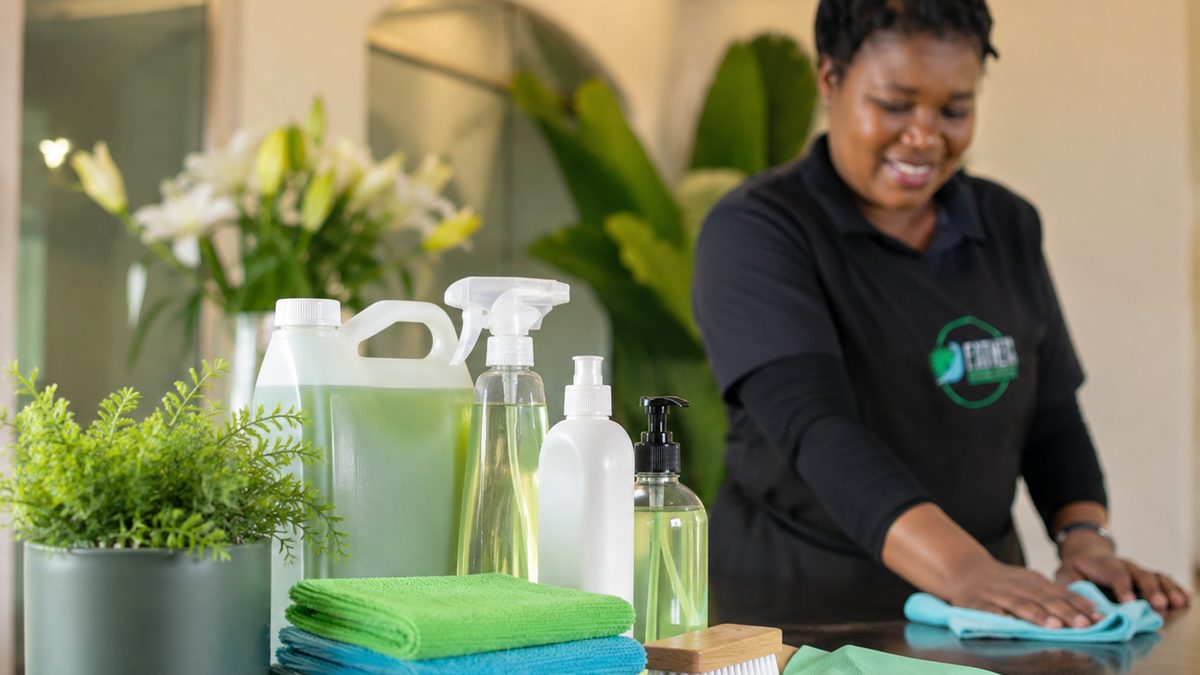
The order that halves the work, and mould control.
Bathrooms are the hardest room in a house to keep clean, and the reason is structural rather than a matter of effort. They combine constant water, warmth, poor airflow and heavy use in a small space. Every one of those conditions works against you.
The good news is that bathroom cleaning responds unusually well to correct technique. Most of the difficulty people experience comes from doing the right things in the wrong order, or using the wrong product on the wrong deposit.
The Order That Halves the Work
Work through a bathroom in this sequence and it takes roughly half the time and effort.
- Ventilate. Open the window, switch on extraction.
- Clear and remove. Take out bath mats, bin liners, and anything on the surfaces.
- Apply chemical and walk away. Toilet bowl, shower, bath, and any limescale. Then leave the room for ten minutes.
- Mirror and glass while the chemical works.
- Basin, taps and vanity.
- Return to the shower and bath. The product has done the work; you are now rinsing rather than scrubbing.
- Toilet — bowl, then seat both sides, then the exterior including the base.
- High-touch points — door handle, light switch, flush handle.
- Floor last, working out of the room, including behind the door and around the toilet base.
Step three is the whole trick
Almost nobody does this at home, and it is why bathroom cleaning feels like hard physical work. Cleaning products need contact time. Spraying and immediately scrubbing means you are supplying with muscle what the chemical would have supplied on its own. Spray, leave the room, come back. Ten minutes of doing something else replaces twenty minutes of scrubbing.
Know Your Deposit — It Determines the Product
Most bathroom cleaning frustration comes from using the wrong product on the wrong thing. Three different deposits, three different chemistries.
| Deposit | Looks Like | Needs |
|---|---|---|
| Limescale | Chalky white or grey crust on taps, showerheads, glass, inside the toilet | Acidic — descaler, or white vinegar for light deposits |
| Soap scum | Dull, filmy, slightly waxy layer on tiles, glass and bath surfaces | Alkaline — bathroom cleaner or degreaser |
| Mould | Black, grey or pink spotting in grout, sealant and corners | Mould remover with dwell time; physical removal where established |
Using an alkaline cleaner on limescale does almost nothing, which is why people scrub taps for ten minutes with no result. Using acid on soap scum works poorly for the same reason. Identify the deposit first.
The Safety Point That Matters Most
Never mix acidic descaler with bleach
The combination releases chlorine gas. In a small, warm, poorly ventilated room — which describes almost every bathroom — this is genuinely dangerous, and it is a recurring cause of injury in domestic and professional cleaning alike. If you use both, rinse thoroughly between them and ventilate. Also never mix bleach with ammonia-based products. When in doubt, use one product, rinse fully, then use the other.
Fixture by Fixture
Shower and glass screens
Screens usually carry both soap scum and limescale, which is why single-product attempts underperform. Treat the soap scum first with an alkaline bathroom cleaner, rinse, then treat any remaining limescale with an acidic descaler and rinse thoroughly.
For the shower itself:
- Spray the walls and floor, leave for ten minutes, then rinse
- Showerhead — if flow is uneven, it is scaled. Unscrew where possible and soak in descaler or vinegar. Otherwise bag the descaler around it and secure with an elastic band.
- Shower door tracks and the drainage channel, which are frequently missed and hold water
- The sealant line where the screen meets the tray
Prevention: a squeegee or towel wipe after each shower takes fifteen seconds and prevents almost all soap scum and limescale from forming. This single habit does more than any product.
Bath
- Alkaline cleaner for the tideline and general film
- Avoid abrasive powders on acrylic baths — they dull the finish permanently
- Overflow outlet, which harbours residue
- The sealant line where the bath meets the wall and floor
- Behind and beneath the taps
Toilet
- Apply cleaner under the rim first and let it run down; leave it while you do other work
- Brush the bowl including under the rim and below the waterline
- The waterline ring is limescale, not dirt. It needs an acidic descaler, not more scrubbing.
- Seat — both faces, plus the hinges, which are frequently overlooked
- Cistern, flush handle or button, and the pipework behind
- The exterior of the pan and the floor junction — this is where persistent bathroom odour originates in most homes. Urine splash runs down the outside of the pan and soaks into the floor junction and grout.
Basin, taps and mirror
- Underneath the tap spout, which is rarely wiped and collects deposit
- The plughole and overflow
- The seal between the basin and the wall
- Mirror — a slightly damp microfibre cloth, then buff dry with a second dry cloth. This works better than any glass spray and leaves no residue for future streaking.
Grout and Sealant
Grout is porous, which is why it discolours and why surface cleaning stops working once staining has penetrated.
For discoloured grout: apply an appropriate grout cleaner or a paste of bicarbonate of soda and water, leave it to dwell, then work along the lines with a stiff narrow brush — an old toothbrush is fine. This is genuinely laborious, which is why it gets deferred, and deferring it makes it harder.
For mould in sealant: a mould remover applied and left for the full stated dwell time will usually clear surface growth. Where mould has grown inside the silicone rather than on it, no product will remove it — the sealant needs cutting out and replacing. You can tell the difference by whether the black is on the surface or visibly within the material.
Sealing grout after a deep clean makes future cleaning considerably easier and slows re-staining. It is worth doing once every few years.
Mould and Moisture: The Real Fix Is Airflow
Mould needs moisture. Every treatment is temporary if the moisture stays.
- Run extraction long enough. A fan wired to the light switch stops the moment you leave, which is exactly when it is most needed. A run-on timer or humidity sensor is a genuine solution.
- Open a window after showering where extraction is inadequate.
- Wipe surfaces down after use — screen, walls, basin.
- Do not leave wet towels and mats in the bathroom to dry.
- Check the ceiling and behind the cistern — mould appears here before anywhere obvious.
- Maintain sealant. Degraded silicone lets water behind fittings, where mould grows out of sight and eventually causes structural damage.
In Gqeberha, coastal humidity means mould establishes faster than in drier inland areas. Ventilation matters more here, not less.
Cloths: The Hygiene Detail People Get Wrong
- Bathroom cloths never leave the bathroom. Keep them a distinct colour so it requires no memory.
- A separate cloth for the toilet that touches nothing else.
- Wash cloths at a hot wash after each use and dry them fully.
- Never store a mop head damp in a bucket — this is a common source of a musty smell that follows the cleaning round.
- The toilet brush needs rinsing in clean water and draining, and replacing periodically. A brush sitting in stagnant water in its holder is worse than no brush.
A Realistic Schedule
Daily — under two minutes
- Wipe the basin and taps after use
- Squeegee or wipe the shower after use
- Hang towels to dry properly
Weekly — twenty to twenty-five minutes
- Full clean following the order above
- Floor including behind the door and around the pan base
- High-touch points
- Empty and wipe the bin
Monthly
- Descale taps, showerhead and toilet waterline
- Extraction fan grille
- Behind and beneath the toilet and basin
- Wash bath mats and shower curtain
Twice yearly
- Grout deep clean and reseal
- Sealant inspection and replacement where degraded
- Full limescale removal throughout
- Cabinet interiors and expired product clear-out
When to Stop and Call Someone
An honest limit — some things are not cleaning problems:
- Mould that returns within days of treatment, which usually means a moisture source rather than a hygiene issue
- Damp patches on walls or ceilings, which point to a leak
- Persistent drain odour after treatment, which may be a dry trap or a plumbing fault
- Grout so contaminated that cleaning no longer improves it — this needs replacing
- Loose or lifting tiles, indicating failed waterproofing behind them
The Bottom Line
Bathroom cleaning gets easier when you apply product and leave it to work, match the chemistry to the deposit, and prevent build-up rather than removing it. Limescale needs acid, soap scum needs alkaline, and mould needs moisture control rather than repeated treatment.
Fifteen seconds of wiping after each shower prevents most of the hard work entirely. And never mix descaler with bleach.
Feathers Cleaning and Hygiene provides residential cleaning and bathroom deep cleaning across Gqeberha, East London, Mthatha and the wider Eastern Cape.
Want this handled properly?
Tell us what you need cleaned and we will come and look at it before quoting anything.
Request a Written Scope Or call 079 096 3267