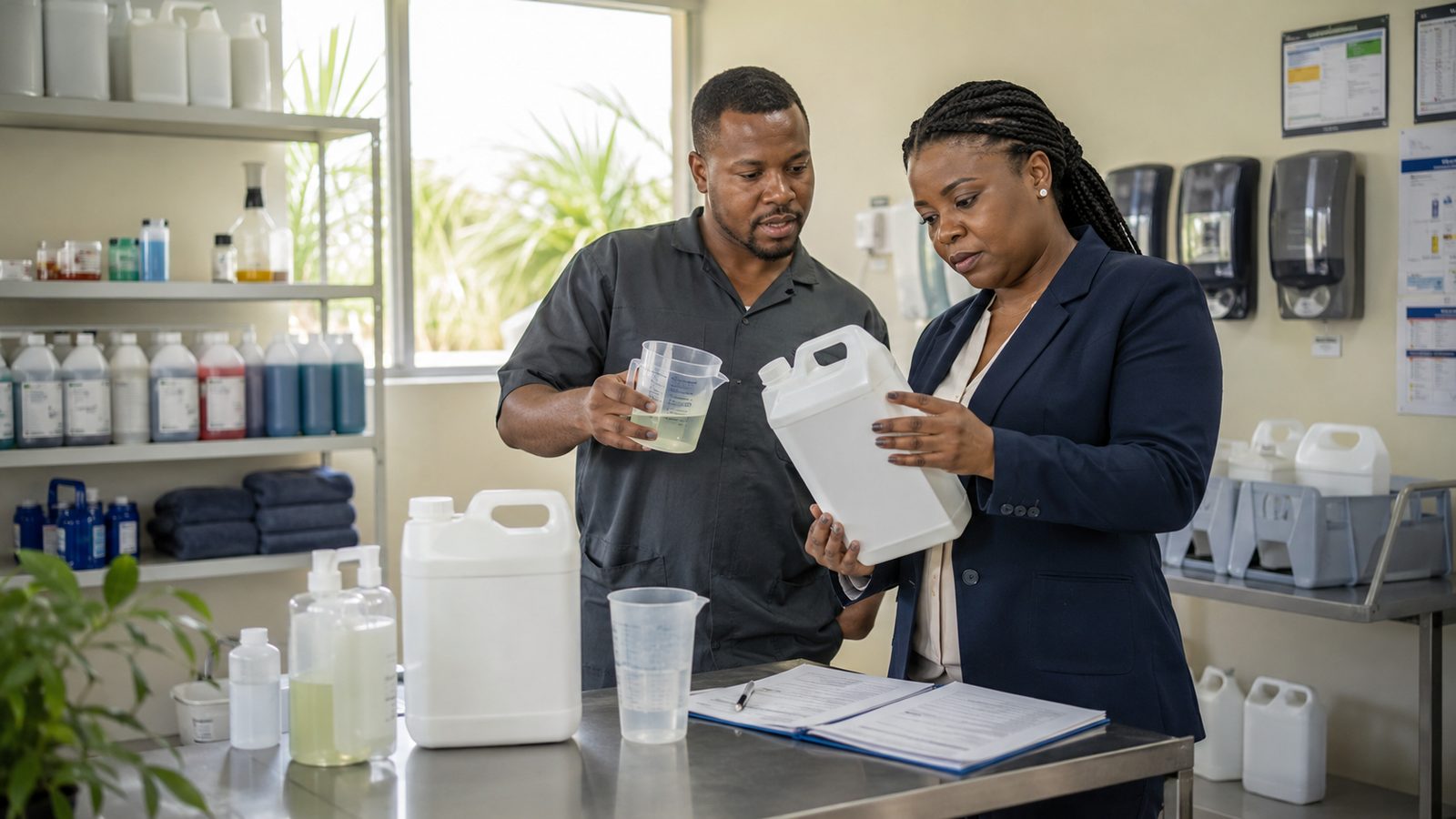
“Eco-friendly” is not a regulated term in South Africa. Neither is “natural,” “green” or “non-toxic.”
The green cleaning market here is growing, and so is the vocabulary attached to it. The difficulty for a buyer is that most of that vocabulary is unregulated, which means it carries whatever meaning the manufacturer wants it to carry. A product can be marketed as environmentally friendly on the strength of one plant-derived ingredient blended into an otherwise conventional formulation.
What the Labelling Rules Do and Do Not Cover
South African consumer protection and product legislation requires truthfulness in advertising and accurate disclosure. What it does not do is define “green.” There is no legal threshold a product must cross before the word can appear on the bottle.
The practical consequence is that the front label tells you about the marketing department and the back label tells you about the chemistry. Read the back.
Reading the Ingredient List
You do not need a chemistry background to make a reasonable assessment. A few markers do most of the work.
| Worth questioning | Generally preferable |
|---|---|
| Phosphates | Plant-derived surfactants |
| Chlorine bleach as a routine cleaner | Enzyme-based formulations |
| Heavy synthetic fragrance | Citric or lactic acid as the primary active |
| Undisclosed “proprietary blend” with no breakdown | Full ingredient disclosure, or a safety data sheet provided without being chased |
A caution about the left-hand column
None of these ingredients is inherently unacceptable, and treating them as banned is its own kind of marketing. Chlorine bleach has legitimate uses where a specific disinfection outcome is required and nothing else will do it. Quaternary compounds are widely used disinfectants. The point is not to avoid these categories reflexively — it is that a product marketed as green while relying on them has a claim worth interrogating.
Certification Is the Only Third-Party Check
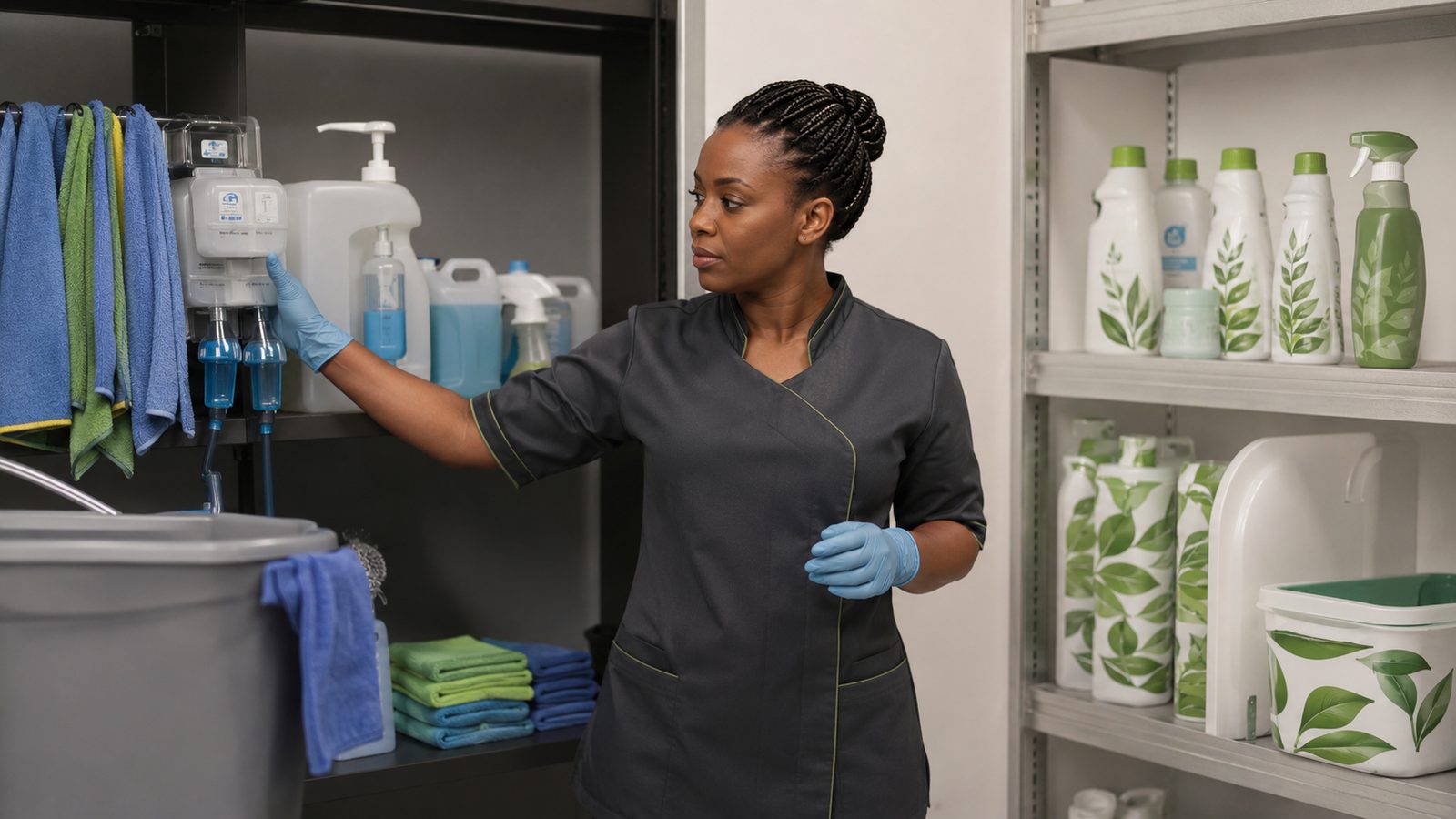
Because the terminology is unregulated, an independent certification is the only external verification available. Internationally recognised schemes assess formulation, and in some cases the full product lifecycle, against published criteria. A product carrying one of them has been assessed by somebody other than the company selling it.
Two cautions. First, verify that the certification named is current and that it applies to the specific product rather than to something else in the manufacturer’s range. Second, check what the scheme actually assesses — some cover toxicity and biodegradability, others extend to packaging and manufacturing, and they are not interchangeable.
If you are asked to accept a certification you have not heard of
Ask for the certificate itself, with a number and an expiry date, and check it against the certifying body's own register. This takes minutes. An unverifiable logo on a product sheet is a design element, not a credential.
In the Eastern Cape, Green Should Also Mean Water-Efficient
In a water-stressed region, a formulation that requires heavy rinsing is difficult to call environmentally responsible whatever its ingredient list. A green specification for this metro should include low-foam products that do not need extensive rinsing, microfibre systems that reduce water demand against cotton, and concentrated products that cut both packaging and transport volume.
Where the Real Benefits Sit
- Indoor air. Lower-emission products reduce the load of volatile compounds released into an enclosed office during and after cleaning.
- The cleaning staff. The people most exposed to cleaning chemicals are the ones using them daily. This is the most direct and least discussed benefit.
- Water systems. Reduced chemical load in the effluent leaving your building.
- Building ratings. Where a property is pursuing a green building certification, cleaning practice is often part of the assessment.
- Procurement. If your organisation reports on sustainability, verified cleaning products are an easy line to evidence.
Writing It Into the Contract
- An approved product list, with ingredient transparency as a condition
- A requirement that safety data sheets be provided on appointment, not on request
- Packaging reduction expectations, including concentrates and refill systems
- Water usage expectations per cleaning cycle where the site is metered
- Waste segregation for cleaning consumables
- Periodic reporting on products used and quantities
Where we stand on this
Feathers Cleaning and Hygiene does not run a certified green product range, and we are not going to describe ourselves as a green cleaning company on the strength of a few plant-derived products. We select products for the surface and the task, we will tell you exactly what is being used in your building, and we will hand over the safety data sheets. If your procurement policy requires certified products specifically, say so at quoting stage — we would rather tell you plainly than relabel what we already have.
The Honest Version
Green cleaning is not about buying products with a leaf on the label. It is about knowing what is in the bottle, what happens to it after it goes down the drain, and whether the claim on the front survives contact with the back. In a region managing genuine water scarcity, that rigour is not an optional extra.
Want to know what is actually being used in your building?
We will tell you exactly what we use and why, and hand over the safety data sheets without being chased.
Ask What We Use Or call 079 096 3267