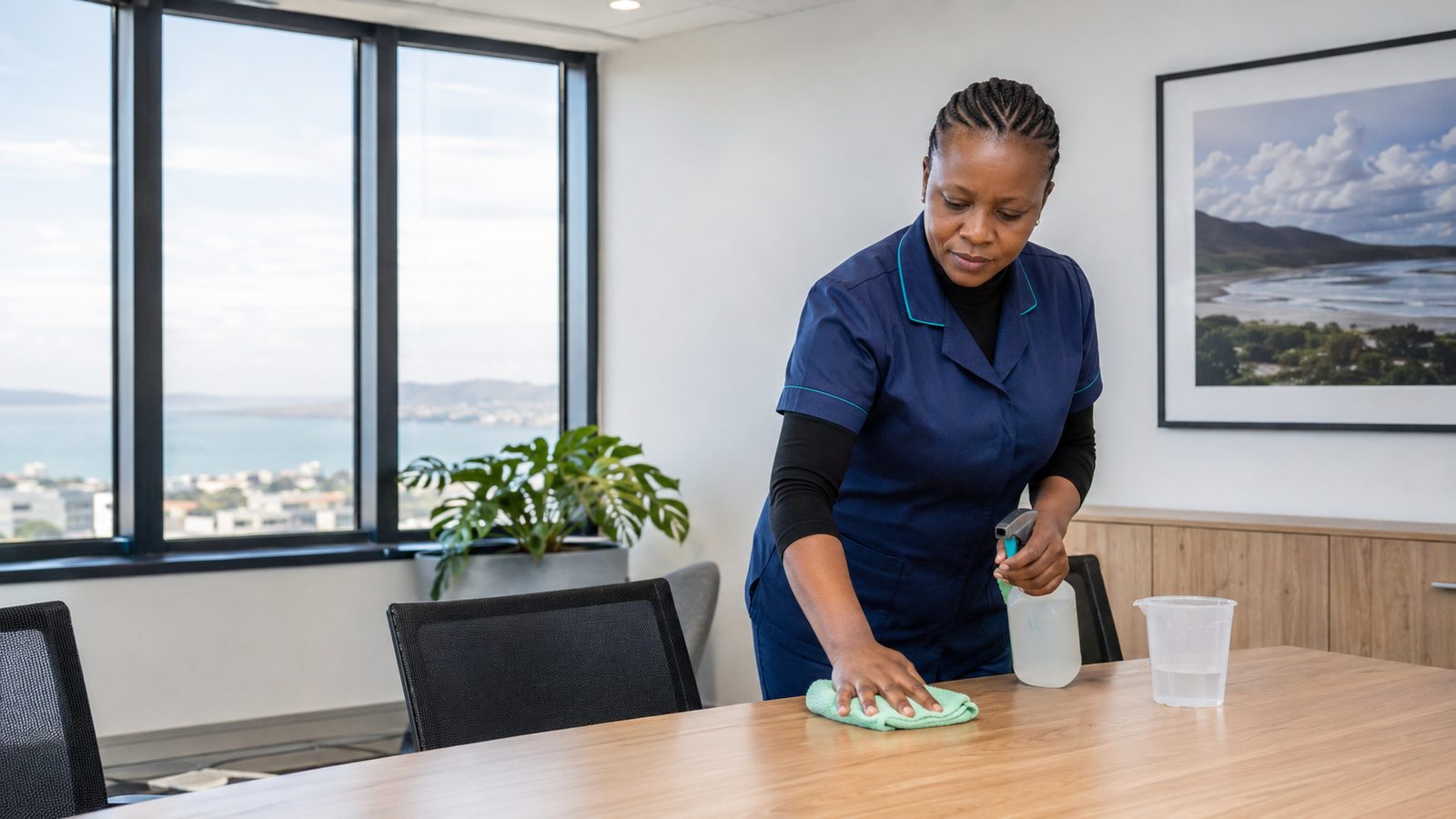
Standard cleaning protocols assume unlimited water. In this metro, that assumption has failed often enough to count as a planning risk.
Nelson Mandela Bay has spent a large part of the last decade managing water scarcity, through drought conditions, dam levels under pressure, supply interruptions and periodic restrictions. For a cleaning operation this is not an inconvenience to be absorbed on the day. It changes the chemistry, the equipment and the method — and it should be visible in the scope before the restriction arrives, not after.
Why Conventional Methods Struggle
Mop-and-bucket work, high-pressure rinsing and foam-heavy detergents all assume water is available in quantity. When it is not, two things go wrong at once. The obvious one is that the task cannot be completed to standard. The less obvious one is residue: a surface cleaned with a foaming detergent and then inadequately rinsed holds a film that attracts soil faster than before, so the site re-soils quicker and the next clean is harder.
Chemistry That Needs Less Rinsing
Low-foam, enzymatic and bio-based formulations are effective at lower dilutions and are designed to need less rinse water than conventional foaming detergents. For a commercial or industrial site that means:
- Less water consumed per cleaning cycle
- Less residue left on floors and surfaces, so slower re-soiling
- Compatibility with the equipment already on site in most cases, so no capital outlay to change over
The trade-off is dwell time. Lower-concentration and enzymatic products generally need to sit on the surface longer to do their work, which means the method has to allow for it. A cleaner rushing the dwell time gets a poor result and blames the product.
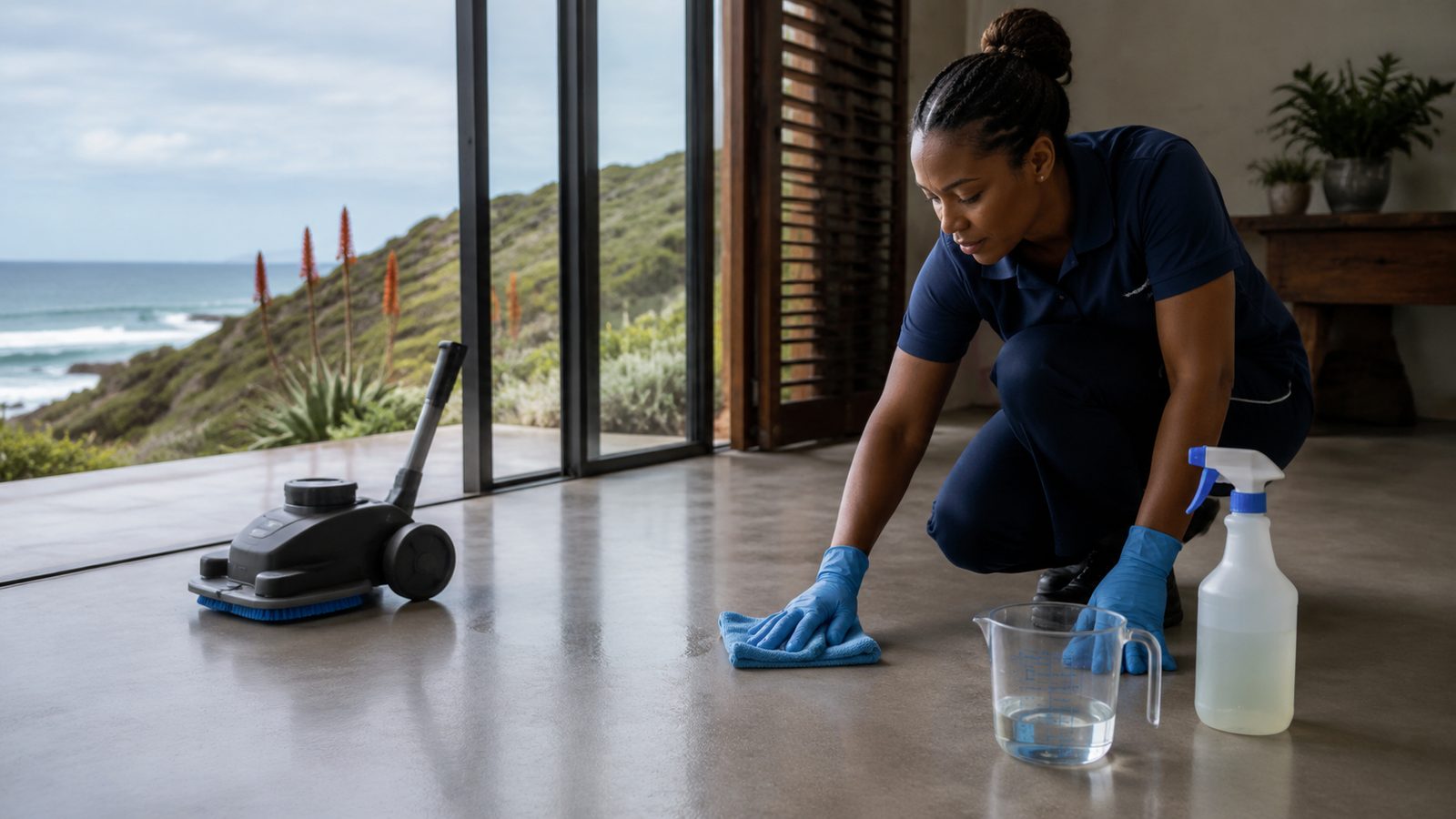
Equipment That Changes the Arithmetic
Microfibre instead of cotton
A quality microfibre flat mop system uses a fraction of the water of a traditional string mop and bucket, and lifts more fine particulate while doing it. The condition attached is laundering: microfibre must be washed separately, without fabric softener, or the fibres clog and the system stops working. A contractor using microfibre without a laundering protocol is using expensive cotton.
Spray-and-vac and scrubber-driers
These apply solution directly to the surface, agitate, and immediately extract the soiled water rather than spreading it around a bucket. Water use drops against mop-and-bucket methods and floors dry faster, which matters in traffic areas and reduces slip risk.
Low-moisture carpet methods
Encapsulation and dry compound systems use markedly less water than hot water extraction and dry in a fraction of the time. In a humid coastal environment that is worth something even when water is plentiful, because slow drying is its own problem.
What to Specify in the Scope
If you manage a site where supply is a live constraint, put it in the document rather than trusting to goodwill:
- An expected water usage band per cleaning cycle, with the method that achieves it
- Low-water formulations named where they are appropriate to the surface
- Equipment specifications that favour extraction over rinsing
- A contingency protocol for restriction days and supply interruptions — what still gets done, what gets deferred, and who is told
- Periodic reporting on water usage where the site is metered
The contingency clause is the one that earns its place
Most water-wise clauses are written for normal operations. The clause that matters is the one covering the day the supply is off: which tasks continue with stored or low-water methods, which are deferred, and how the contractor notifies you rather than simply not arriving. Sites with that clause keep functioning. Sites without it discover the gap on the morning it happens.
Where Water-Wise Has Limits
Being honest about this is more useful than overselling it. Some work genuinely needs water — heavy degreasing, certain industrial floor work, sanitising after a contamination event. Low-water alternatives exist for maintenance cleaning, not for every task on the list. A contractor claiming they can do everything with a damp cloth is selling you something.
The Bottom Line
Water-wise cleaning in the Eastern Cape is not an environmental gesture. It is operational continuity: the ability to keep a site to standard through a restriction without a scramble. The methods are established, the equipment is available, and the difference is whether it was planned into the scope or improvised on the day.
Need a scope that survives a restriction?
We build water-wise cleaning specifications for commercial and industrial sites in Gqeberha.
Request a Water-Wise Scope Or call 079 096 3267