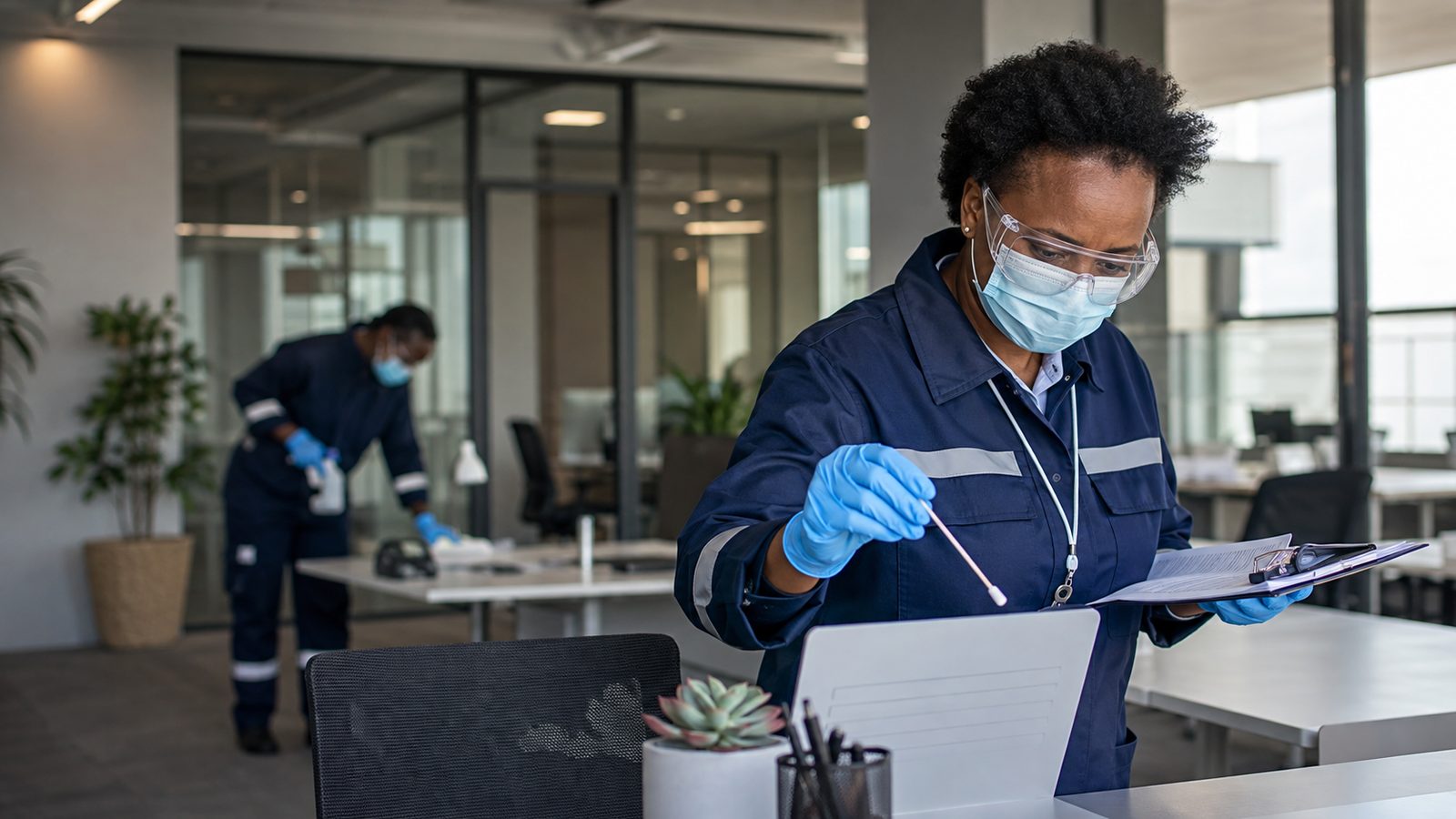
Workplace hygiene is a legal duty carried by the employer, and it is demonstrated with records rather than with appearances.
The Occupational Health and Safety Act requires every employer to provide and maintain a working environment that is safe and without risk to health. In practice that reaches into cleaning: managing biological hazards, maintaining ablution facilities, controlling waste, and being able to show what was done. Poor hygiene turns into inspections, compliance orders, avoidable absenteeism and, occasionally, a reputational problem you did not budget for.
How to use this guide
We are naming the frameworks that apply and what they broadly require. We are not quoting regulation numbers, thresholds or clause text, because those are revised and because the version that applies to your premises depends on your sector and your activities. Treat this as an orientation, then confirm the detail with the Department of Employment and Labour, your health and safety consultant, or the environmental health department at Nelson Mandela Bay Municipality. Getting a citation wrong in your own compliance file helps nobody.
The Frameworks That Reach Into Cleaning
- The Occupational Health and Safety Act. The general duty to eliminate or reduce hazards, including biological hazards arising from poor sanitation.
- Regulations covering hazardous biological agents. Relevant where workers may be exposed to bacteria, viruses or fungi in the course of their work.
- Facilities regulations. Minimum standards for toilets, handwashing, drinking water and waste management in workplaces.
- Food premises hygiene regulations. Additional and stricter requirements for surfaces, equipment, waste control and pest management wherever food is handled.
- Regulations covering hazardous chemical agents. Safety data sheets, labelling, storage and training for the chemicals used to do the cleaning itself.
What Inspectors and Auditors Actually Look At
| Area | What is checked |
|---|---|
| Restrooms | Soap, toilet paper and hand drying available; sanitary bins present and serviced; no mould or persistent odour |
| Kitchens and canteens | Sanitised food-contact surfaces, covered bins, evidence of pest control |
| General workspaces | High-touch surface treatment, waste removal, cleaning records |
| Chemical safety | Correct storage and labelling, current safety data sheets, staff training records |
| Documentation | A written cleaning schedule and signed evidence that it is being followed |
The Compliance Failures We See Most Often
- No documented cleaning schedule — the work happens, but nothing records it
- No training records for cleaning staff
- Unlabelled decanted chemicals, or products diluted by guesswork
- Sanitary bins overflowing or serviced irregularly
- Mould in grout, on ceilings or under sinks, treated as cosmetic
- Blocked drains and persistent odours accepted as normal
- Empty soap or paper dispensers at the time of inspection
- One cloth used across multiple areas, which is a cross-contamination route rather than a cleaning method
Almost every item on that list is inexpensive to fix and expensive to be found with.
A Working Schedule
Frequencies should be set for your site, but this is the shape most workplaces need:
Daily
- Disinfect high-touch surfaces
- Clean and restock restrooms
- Empty bins
- Disinfect kitchen counters and appliance handles
Weekly
- Deep clean restroom floors and walls
- Dust surfaces, skirtings and windowsills
- Disinfect shared equipment — keyboards, phones, printers
Monthly
- Machine scrub or buff hard floors
- Clean air vents and extractor grilles
- Inspect for mould and moisture
- Deep clean fridges and microwaves
Quarterly and annually
- Carpet and upholstery deep cleaning
- Window cleaning inside and out
- Strip and seal hard floors where applicable
- Full deep clean of kitchens and ablutions
How a Cleaning Partner Reduces the Risk
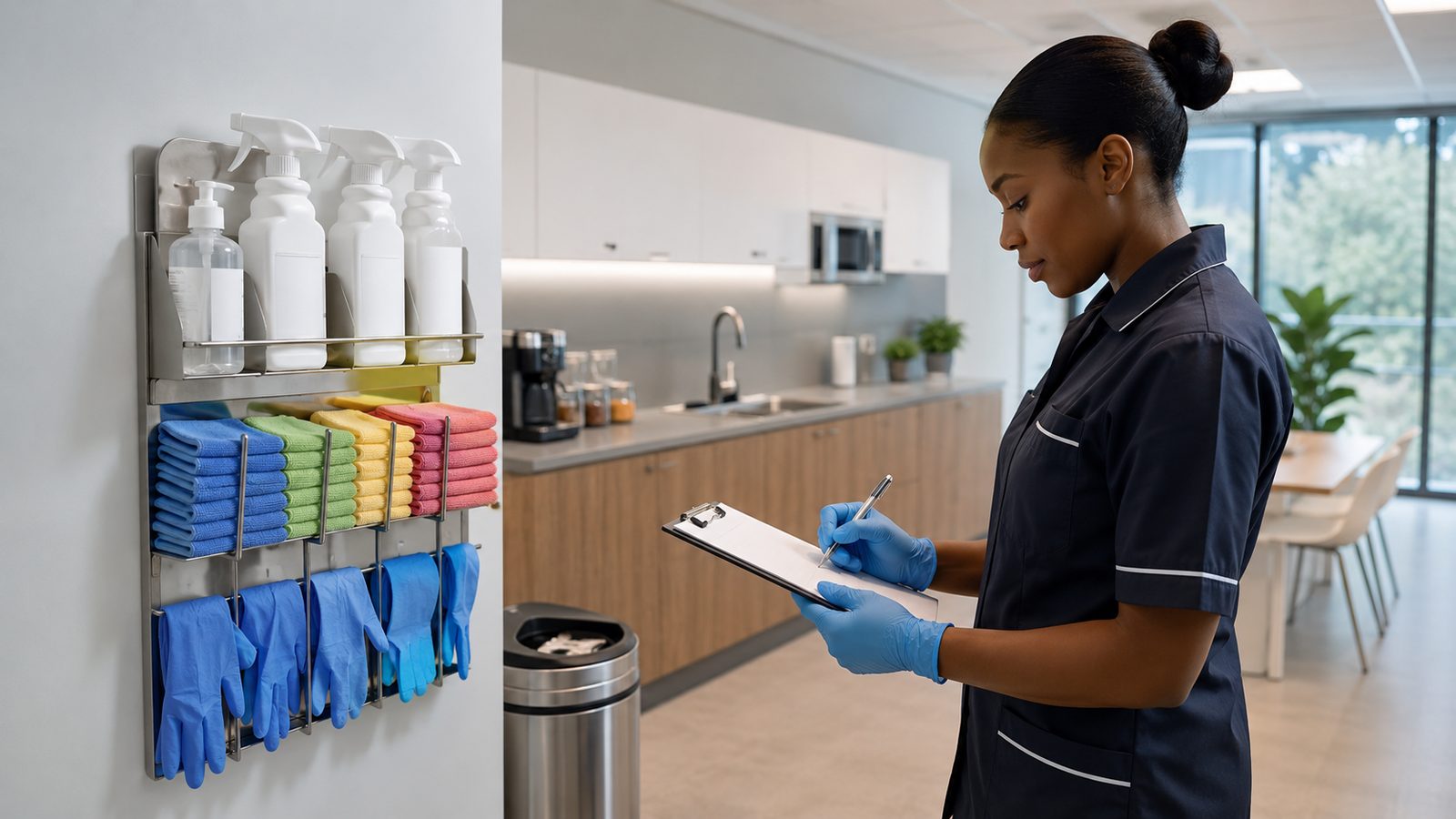
- Colour-coded microfibre systems that make cross-contamination difficult by design
- Correct disinfectant dwell times, applied as method rather than left to chance
- Written schedules with signed completion records held on site
- Trained staff with documented training
- A clear position on sanitary waste — whether the cleaning contractor arranges it or, as is more common, a separate licensed provider holds it. Feathers does not operate sanitary waste collection; we make sure the arrangement is named in the scope rather than assumed
The record is the deliverable
If an inspector arrives, the cleaning that happened last Tuesday and was not recorded did not happen as far as the file is concerned. This is the single highest-value change most businesses can make: not cleaning more, but recording what is already being cleaned.
The Bottom Line
Compliance gets easier when hygiene is managed as a system rather than as a series of tasks. Written schedule, trained people, correct chemistry, sanitary waste routed properly, and records that would satisfy someone who was not there.
Frequently Asked Questions
How often should a workplace be deep cleaned?
For most offices, at least twice a year, with more frequent deep cleaning in food premises, healthcare-adjacent facilities and high-density or high-traffic environments. The right interval for your site depends on use, occupancy and sector, and should be set in the scope rather than assumed.
Do we need a documented cleaning schedule?
Demonstrating that hygiene is being managed generally requires records, and a written schedule with signed completion is the simplest way to produce them. Whether a specific document is mandatory for your premises depends on your sector and activities — confirm that with your health and safety consultant or the Department of Employment and Labour.
Can we use our own staff and still meet our obligations?
Yes. The duty sits with the employer either way. If cleaning is done in-house you need to ensure your staff are trained, supervised, correctly equipped and working to a documented schedule, and you carry the record-keeping yourself.
Want a hygiene plan that supports your obligations?
We provide site-specific assessments, written schedules and the records that go with them.
Request a Hygiene Assessment Or call 079 096 3267