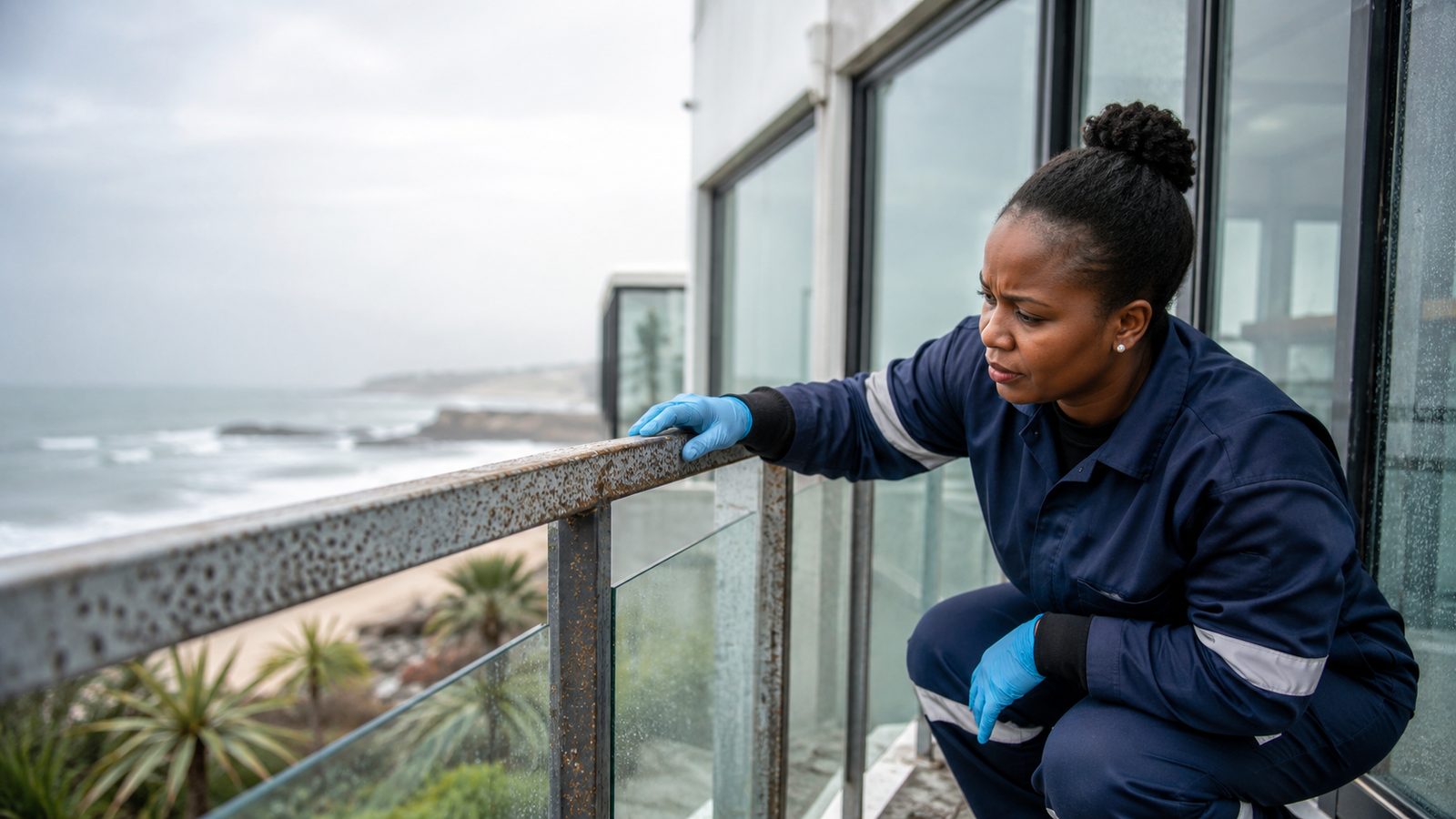
Salt air works slower than industrial dust and does more permanent damage. Gates, burglar bars, frames and signage go first.
Coastal air in Gqeberha carries fine salt that settles on every external surface and stays there. Unlike dust, it is not really a cleanliness problem — it is a corrosion problem that happens to look like a cleanliness problem in the early stages, which is why it is usually left until it has stopped being fixable.
What Salt Actually Does
- On metal. Salt attracts and holds moisture out of the air, so security gates, burglar bars, window frames, gutters, railings and signage stay damp for longer than the weather alone would keep them. That extended wet contact is what drives corrosion.
- On paint and powder coating. It works into edges, joints, fixing points and any chip in the coating, then undercuts the finish from underneath. By the time it is visible as bubbling or flaking, the substrate underneath has already gone.
- On glass. It leaves a dull film that rebuilds continuously. If that film is repeatedly dry-wiped, particularly where abrasive dust is also present, the glass eventually etches.
Why Standard Schedules Fall Behind
A cleaning schedule written for an inland building treats external surfaces as a low-frequency item, because inland they largely are. On the coast that assumption fails within the first few months, and the failure is invisible until it is expensive. Nobody notices a gate corroding. Everybody notices when it needs replacing.
The cost curve here is unusually steep: regular, low-effort attention costs very little, and remediation after corrosion has started costs a great deal. There is not much middle ground.
The Correct Method
It is not complicated, which is part of the reason it gets done badly:
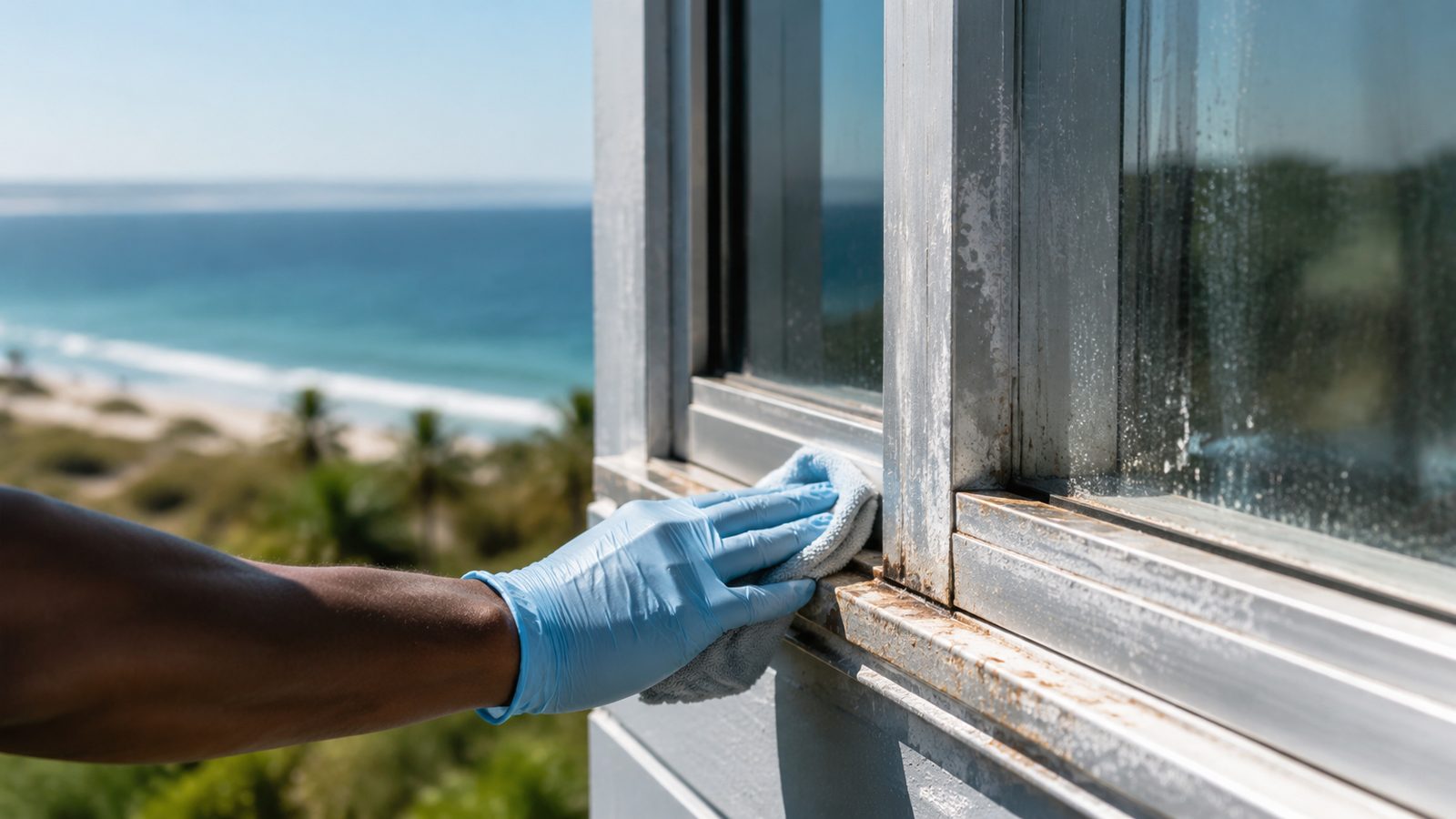
- Wet the surface first. Never dry-wipe salt-laden metal or glass.
- Lift the salt with a damp microfibre cloth or a soft brush, rinsing the cloth often so it is removing rather than redistributing.
- Rinse the surface down properly, particularly in joints, hinges, tracks and fixing points where salt concentrates.
- Dry, rather than leaving standing water sitting in a joint.
- On gates, bars and railings, apply the appropriate protective treatment at the interval set in the scope. A light rinse and a protective coat on a schedule beats aggressive scrubbing after corrosion has begun.
The joints matter more than the flat surfaces
Salt concentrates where water sits and where surfaces meet — hinge points, weld seams, the bottom rail of a gate, the underside of a window frame, the fixing bolts on signage. A cleaner who does the flat panels and skips the joints has cleaned the part that was not going to fail.
When Cleaning Is No Longer the Answer
If you are seeing white powdery deposit on aluminium, rust bleeding from fixing points, or paint flaking at edges, cleaning will not reverse it. The honest answer at that stage is treatment, recoating or replacement — and continuing to clean it harder is a way of spending money without changing the outcome.
We will say so rather than sell another visit. It is the same principle we apply to etched glass and to grout that has passed the point of recovery.
The Bottom Line
Salt damage is almost entirely preventable and almost never reversible. Regular wet cleaning, attention to joints and fixings, and protective treatment on a schedule will keep external metalwork serviceable for its full life. Nothing done after the fact will.
Feathers Cleaning and Hygiene includes salt-specific external cleaning in scopes for coastal properties as standard rather than as an add-on.
External metalwork already showing it?
We will tell you plainly whether cleaning still helps or whether it has become a maintenance job.
Request an External Assessment Or call 079 096 3267