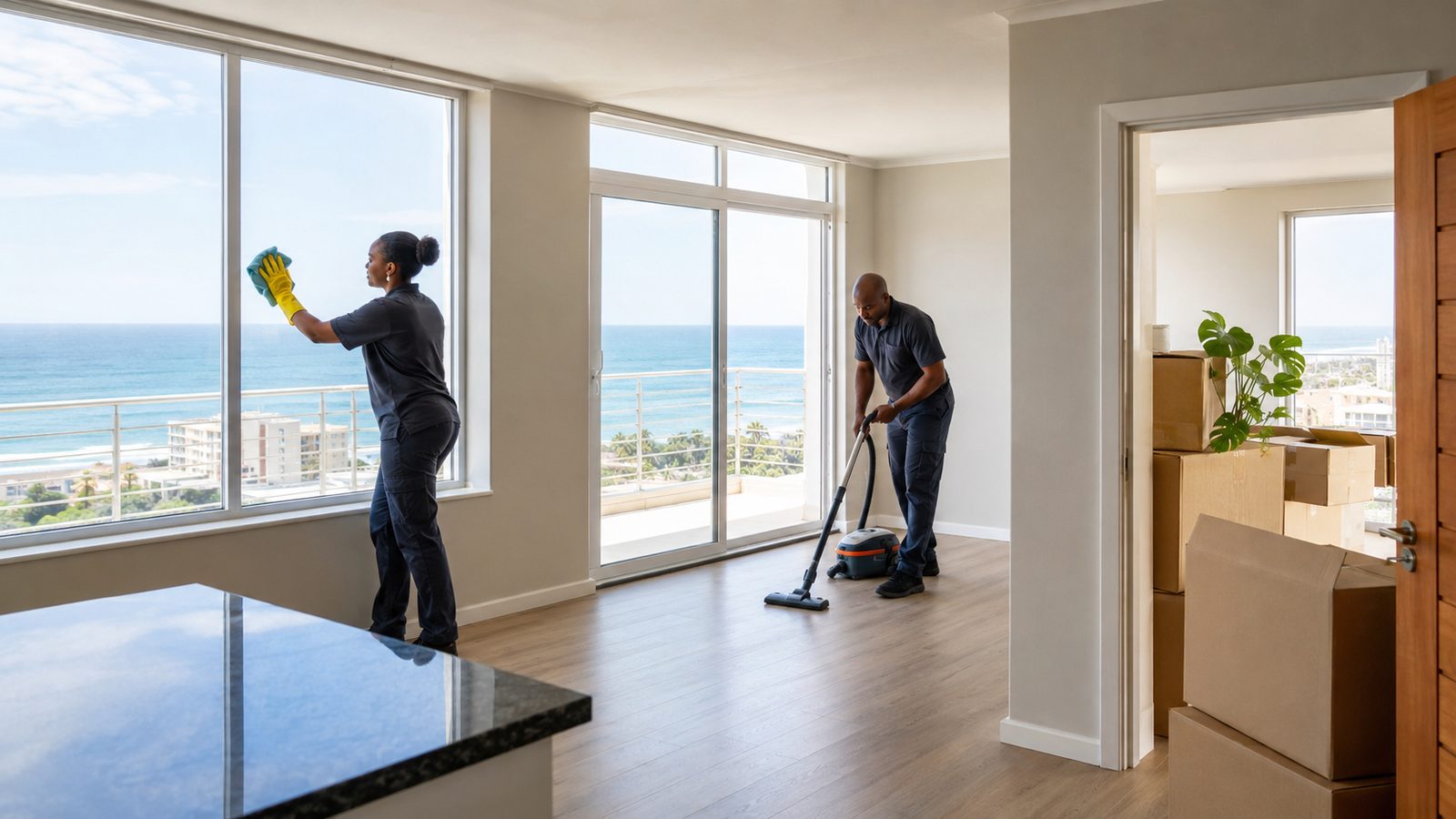
Deposit deductions are rarely random. They cluster around the same five or six areas, every time.
An outgoing inspection is not a general impression of tidiness. It is a comparison against the condition the property was in when you took it, usually recorded in an ingoing inspection report that both you and the landlord or agent signed. Anything worse than that baseline, beyond fair wear and tear, is a potential deduction.
Which means the useful question is not “is the place clean?” It is “where will the inspector actually look, and does it match the ingoing report?”
What this guide is and is not
We clean properties; we do not give legal advice. Your lease and the rental housing legislation that governs it set out the inspection and deposit process, including timeframes and what has to be recorded. Those provisions matter and they are worth reading properly. Check your own lease first, and if a deduction is disputed, speak to the Rental Housing Tribunal in your province or to an attorney. Everything below is about cleaning, which is the part we can speak to.
Fair Wear and Tear Versus Cleaning
This distinction settles most disputes. A carpet that has thinned along a walkway over three years is wear. A carpet with ground-in marks that were never lifted is cleaning. Paint that has faded is wear. Scuffs, adhesive residue and picture-hook damage are not.
You are not expected to hand back a property in better condition than you received it. You are expected to hand it back clean, and clean is measured against the ingoing report — which is why finding that document before you start is the first task, not an afterthought.
The Outgoing Inspection List, Room by Room
Kitchen — the most expensive room to get wrong
- Oven interior, racks, door glass including between the panes where the door separates
- Extractor hood, and the filter itself — often skipped, always checked
- Hob, plate rings, and the surround where spillage bakes on
- Inside and on top of every cupboard, and the cupboard doors including edges and handles
- Fridge and freezer if they stay: interior, seals, drip tray, and behind and underneath
- Sink, drain, taps and any limescale on the spout
- Behind and under the stove and washing machine
- Skirtings and the floor edges where cupboards meet the wall
Bathrooms
- Grout lines and the silicone seal at bath and shower edges — mould here is the most common single deduction
- Shower door and screen scale, including the runners and hinges
- Toilet: bowl, under the rim, the base and the fixing bolt caps
- Extractor fan grille
- Mirrors, cabinet interiors, and behind the pedestal
- Plugholes and overflow openings
Living areas and bedrooms
- Built-in cupboard interiors, shelves, rails and runners
- Walls: scuff marks, adhesive residue, and holes from mounted items
- Skirtings, door frames, doors and handles
- Light fittings, shades and ceiling fan blades
- Curtain rails, blinds and pelmets
- Plug sockets and switch plates
- Behind and under everything that has been standing in one place for a year
Floors
- Carpets professionally extracted where the lease requires it — check the wording, many leases do
- Hard floors mopped and the edges detailed, not just the middle
- Vinyl seams and tile grout
- Under where furniture stood, which is often a different colour
Windows, outside and the parts people forget
- Windows inside and out where safely reachable, plus tracks and burglar bars
- Balcony, patio, braai area and any built-in braai
- Garage floor, including oil marks
- Bin area
- Meter boxes, geyser cupboards and the space under the stairs
The Four That Cost People the Most Money
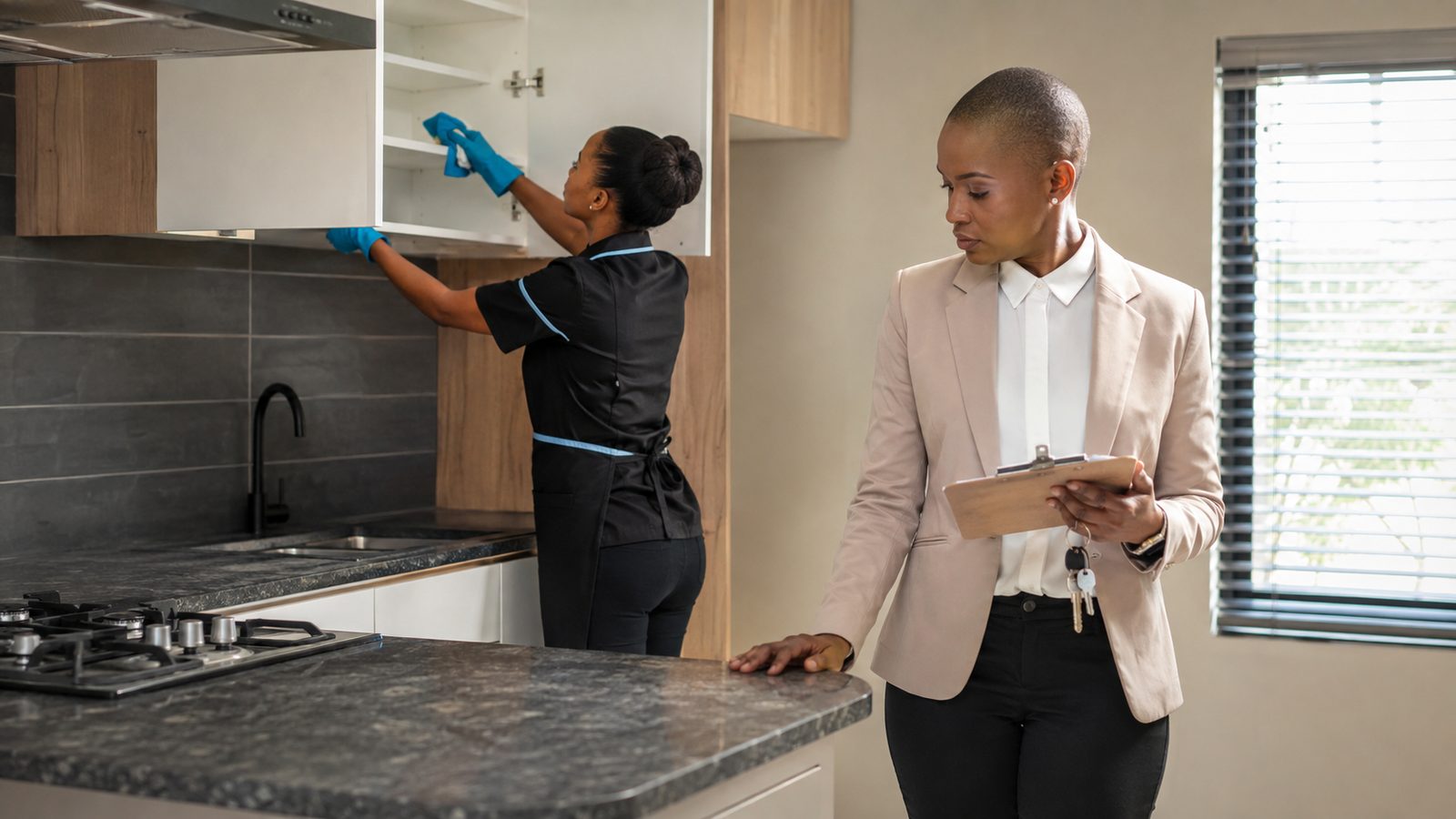
Across move-out work, four items account for a disproportionate share of deductions: the oven, bathroom grout and silicone, carpets, and wall marks. If time or budget is short, these are where to concentrate — they are visible, they are checked without exception, and they are expensive for a landlord to remedy, which makes the deduction easy to justify.
Timing Matters More Than People Expect
- Clean after the furniture is out, not before. Cleaning around boxes guarantees a second visit.
- Book the inspection after the clean, with a gap. Same-day is asking for trouble if anything needs a second pass.
- Allow drying time for carpets. In Gqeberha’s humidity, extracted carpet in a closed-up empty flat dries slowly. Damp carpet at an inspection reads as a problem even when it is not, and genuinely damp carpet left closed up will start to smell.
- Open the property up. Airflow during and after the clean is worth more than any product.
Keep the Evidence
Photograph the property after the clean, in daylight, room by room including the areas listed above. Keep the dated invoice for the clean and for any carpet work. If a deduction is later proposed for something you cleaned, a dated photograph and an invoice are far more persuasive than a recollection.
Should You Do It Yourself?
For a small, well-maintained flat where you have kept on top of things, self-cleaning is entirely reasonable. Bring in a professional clean when the property is large, when it has been occupied for several years, when the lease specifies professional carpet cleaning, when the oven has been used properly, or simply when you are moving and do not have two full days to give it. The cost of the clean is usually well below the cost of a contested deduction.
The Bottom Line
The outgoing inspection is a comparison, not an impression. Find the ingoing report, work the list in order, concentrate on the oven, the grout, the carpets and the walls, leave time for drying, and photograph everything.
Feathers Cleaning and Hygiene handles move-out and move-in cleans across Gqeberha, usually bookable within 24 hours, and works to a written checklist you can hand to the agent.
Moving out this week?
Move-out and move-in cleans can usually be booked within 24 hours in Gqeberha.
Book a Move-Out Clean Or call 079 096 3267