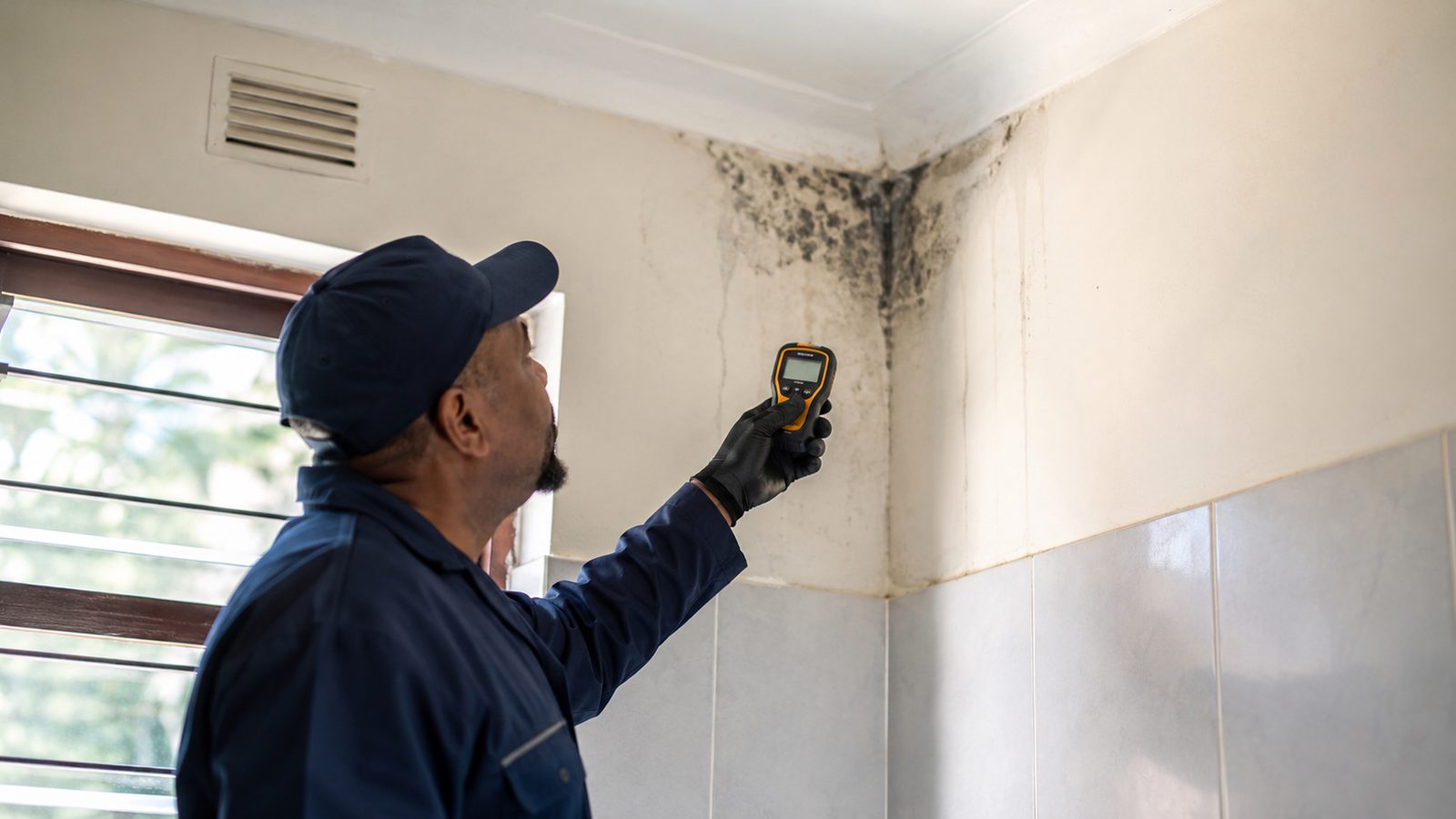
If mould returns within days of a proper clean, the cause is almost never the cleaner.
Coastal humidity in Gqeberha gives mould conditions it does not get in a drier climate. It establishes on external walls behind furniture, in bathroom grout, around air-conditioning drip trays, inside poorly ventilated cupboards and along window reveals. A thorough clean removes the visible growth. The question that matters is what happens over the following fortnight.
The Diagnostic Is Simple
Clean the area properly. Then watch it. If the same patches reappear within days or a week, you do not have a cleaning problem — you have a moisture problem that is producing a visible symptom. Cleaning is treating the symptom, which is why it keeps needing to be repeated.
Where the Moisture Is Usually Coming From
- A cold external wall. Warm indoor air meets a cold surface and condenses on it. Furniture pushed flat against that wall removes the air movement that would otherwise dry it.
- A drip tray that is not draining. Air-conditioning units produce condensate continuously; if the tray or its drain line is blocked, that water has to go somewhere.
- A leak. A failed shower seal, a slow pipe leak inside a wall or under a sink, or a roof or gutter defect above the affected area.
- Insufficient air movement. A closed room, a cupboard that is never opened, an ablution with no working extractor or an extractor venting into a ceiling void rather than outside.
- Rising damp or a failed damp-proof course. Typically at floor level and along the base of a wall.
No cleaning product addresses any of these. Treating the surface while the source remains produces a short improvement followed by the same recurrence, on the same schedule, indefinitely.
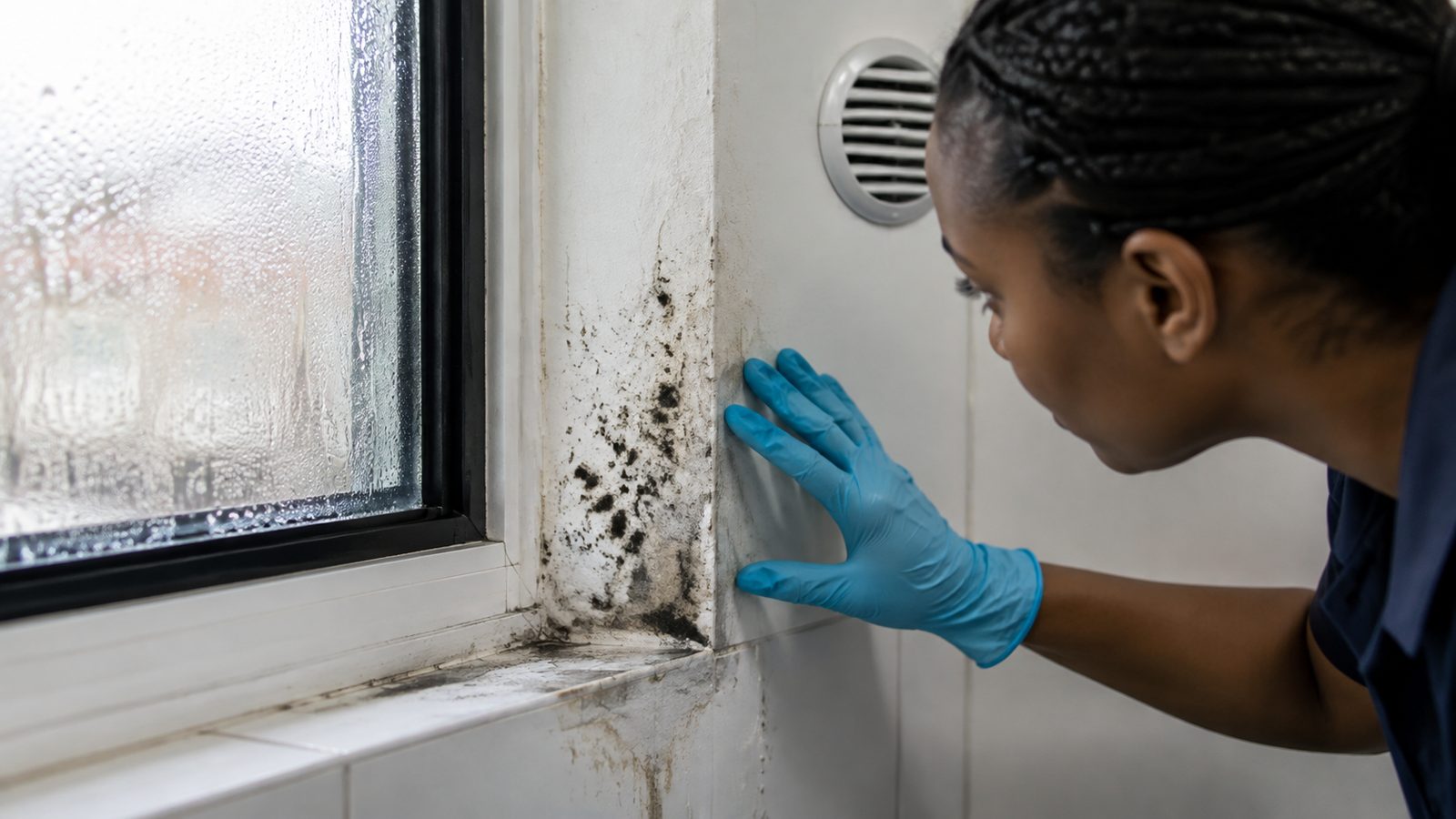
The Correct Sequence
- Clean the affected area thoroughly, using a method appropriate to the substrate.
- Dry it properly and improve air movement where you can — move furniture off the wall, open the cupboard, get the extractor working.
- Observe for two to three weeks and note whether the area stays dry.
- If it does not, stop cleaning and find the water. That is a building or maintenance assessment, not a stronger chemical.
What we will tell you
When a recurring mould issue has moved past what cleaning can solve, we say so and stop selling visits. That means a plumber, a damp specialist or a building contractor is the right next call, not us. Repeated ineffective treatment is expensive for you and it is not a service worth providing.
What Cleaning Genuinely Achieves
It is worth being clear that cleaning is not pointless here. Removing established growth reduces the spore load in the room, prevents the staining becoming permanent in porous materials like grout and silicone, and stops the area becoming an odour source. On surfaces caught early, cleaning at the right frequency will keep the problem suppressed even where the underlying humidity is not fully resolved.
What it will not do is remove the cause, and a contractor who implies otherwise is selling a recurring visit.
What Belongs in the Scope
For a property where humidity is the dominant factor, the cleaning specification should include:
- Shorter intervals on the identified high-risk zones rather than a uniform site frequency
- Ablution grout and silicone inspected and treated as a named item, not absorbed into ‘bathrooms’
- Air-conditioning drip trays and drain lines named — with whoever is responsible for them identified
- A written note of anything observed that sits outside the cleaning remit, so it reaches the person who can act on it
That last item is the one that turns a cleaner into a useful set of eyes on the building. Someone is in every room of your property every week. They should be reporting what they see.
The Bottom Line
Mould that returns is a water story, not a hygiene story. Clean it, dry it, watch it, and if it comes back, spend the money on finding the moisture rather than on another round of treatment.
Same patches coming back every month?
We will clean it properly and tell you honestly whether cleaning is the right tool for the problem.
Request an Assessment Or call 079 096 3267