A warehouse that looks tidy from the doorway can still have dust on stock, unsafe floor residues and neglected staff areas. Effective industrial cleaning starts by separating the site into operational zones.
Port Elizabeth and Gqeberha businesses use warehouses for very different work: distribution, assembly, general storage, workshops and manufacturing support. One generic checklist cannot safely cover every activity.
The approach below is for routine, suitable cleaning work. Hazardous substances, unknown spills, confined spaces, live production equipment and other specialist conditions require site-specific controls and qualified providers rather than ordinary general cleaning.
Map the warehouse before setting a cleaning schedule
Walk the premises with an operations representative. Mark pedestrian routes, forklift lanes, loading bays, racking, product storage, staff rooms and waste points. Identify when each zone is accessible and what may be damaged by water, dust movement or cleaning equipment.
The most useful question is not simply how large the warehouse is, but how each area is used. A quiet storage aisle may need less frequent attention than a loading zone that receives heavy traffic all day.
Daily cleaning priorities
- Remove visible loose litter and address ordinary dirt from designated pedestrian and traffic routes.
- Inspect entrances and loading bays for tracked-in soil, packaging waste and non-hazardous residues.
- Empty appropriate waste bins and keep access to exits and emergency equipment unobstructed.
- Clean staff ablutions, handwashing points, kitchens and break areas to their agreed frequencies.
- Report leaks, unidentified spills, damaged surfaces or unsafe conditions to the site controller instead of attempting unapproved cleanup.
Weekly and periodic work
- Clean accessible floor edges, corners, ledges and other dust collection points.
- Treat suitable floors with a method approved for their coating, traction and load requirements.
- Clean office and reception areas attached to the facility as separate hygiene zones.
- Schedule higher-level dusting and racking-area work only after access, working-at-height and stock-protection controls are defined.
- Review door tracks, internal glazing and approved equipment exteriors where included in the scope.
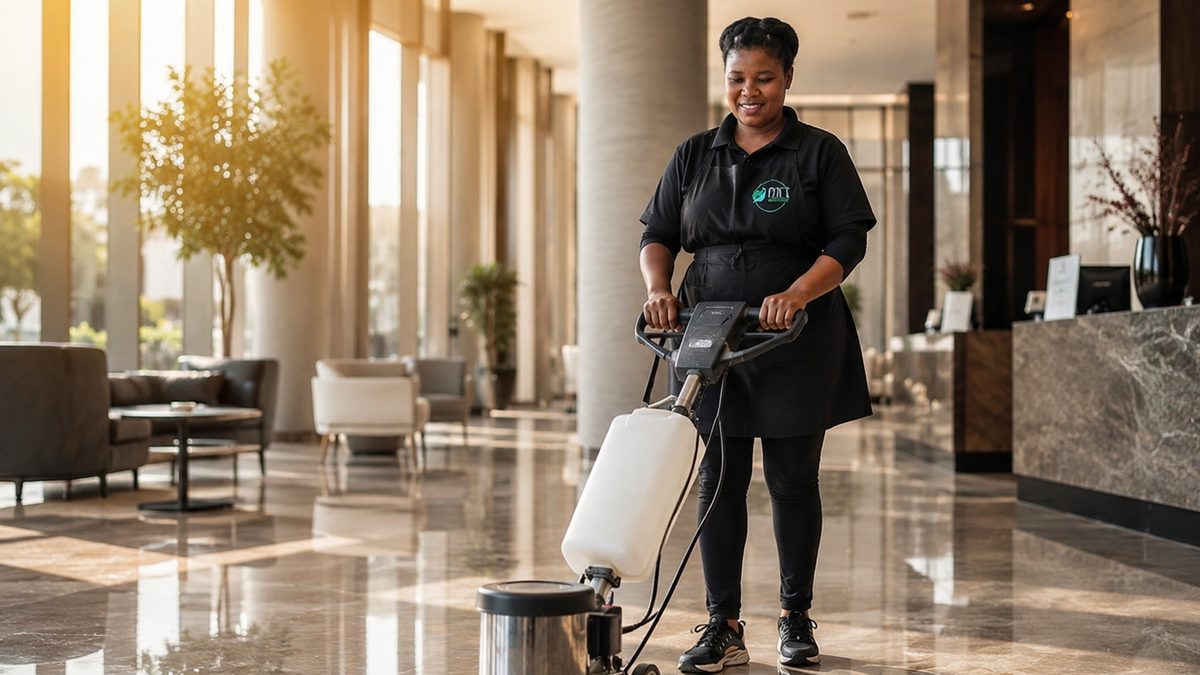
- Assess whether periodic machine scrubbing or detailed degreasing is necessary for appropriate surfaces.
Dust control needs the right method
Dry sweeping or blowing dust around can increase airborne exposure and simply move contamination to another area. The method must match the material: appropriate contained vacuuming or controlled damp cleaning may be suitable for ordinary non-hazardous dust, while combustible, respirable or otherwise hazardous dust needs specialist assessment.
This distinction matters in industrial environments. Never assume that dust is harmless because it looks like dirt. If the source is unknown, pause and ask the site safety representative to identify it before a cleaning method is selected.
Keep cleaning separate from moving equipment
Cleaning and active forklift traffic should not compete for the same floor space. Define cleaning windows, temporary barriers and handover points. Wet-floor work needs appropriate controls and sufficient drying time before the route is reopened.
A supervisor should confirm who authorises access, isolates equipment if necessary and accepts completed work. Cleaning staff should not operate production machinery or enter restricted zones merely because those areas appear on a site plan.
Build a useful written scope
A clear warehouse cleaning proposal identifies each zone, task, method, frequency, access restriction, equipment responsibility and excluded specialist activity. Include a method for reporting unusual findings and a record of completed periodic tasks.
That document makes proposals easier to compare and reduces interruptions once the cleaning team starts. It also helps the client distinguish routine maintenance from a separate specialist intervention.
Frequently Asked Questions
Can warehouse cleaning happen during operations?
Some low-risk tasks can be scheduled around normal operations, but traffic lanes, equipment areas and wet-floor work may require controlled access or a planned shutdown window.
Is industrial spill response part of normal cleaning?
Not automatically. Unknown, hazardous or regulated spills require the site emergency procedure and appropriately trained people and equipment.
Need a practical cleaning scope for your industrial site?
Tell Feathers about the premises, operating hours and zones that need routine attention.
Explore Industrial Cleaning Or call 079 096 3267